Summer holiday programme of the town of Rottenburg
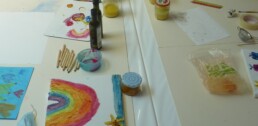
Dragon’s blood and purple snail, inkstone and hen’s egg – painting like in the Middle Ages
We take a trip into the exciting world of the Middle Ages and explore the paintings of the Diocesan Museum.
In the process, we learn all kinds of strange stories, colours and materials. Afterwards, we will build a stretcher frame out of wood and canvas and make our own paints – of course, we can also paint with them.
For children 8–10 years
When: Saturday, 05 August 2023, 11.00 – 14.00 hrs
Meeting point: Diocesan Museum Rottenburg,
We “sniff” through the museum and then go together to the KunstGasse: all children can also be picked up there. You will find the entrance to our KunstGasse directly to the left of the Theo bookshop (Karmeliterstr. 2, Rottenburg).
Cost: Free admission to the museum. Material contribution: 6 euros per person.
Please bring a snack and something to drink: A snack and something to drink, clothes that can get dirty.
Currently there are still a few places available.
Feel free to contact the museum if you would like to have a little adventure with brush and paint. We look forward to seeing you!

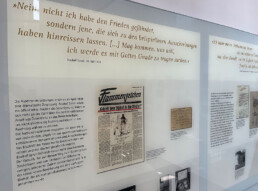
Ceremony at the Bishop Sproll memorial
"Is and remains a role model in faith"
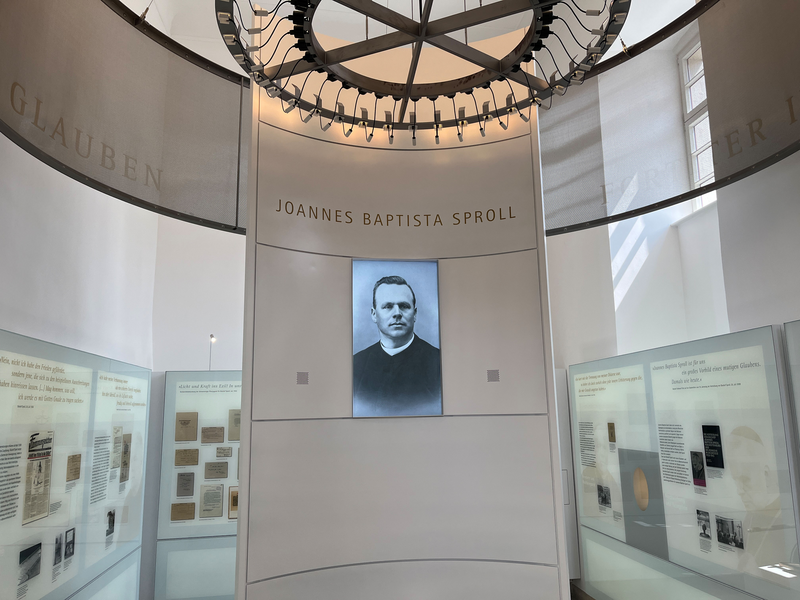
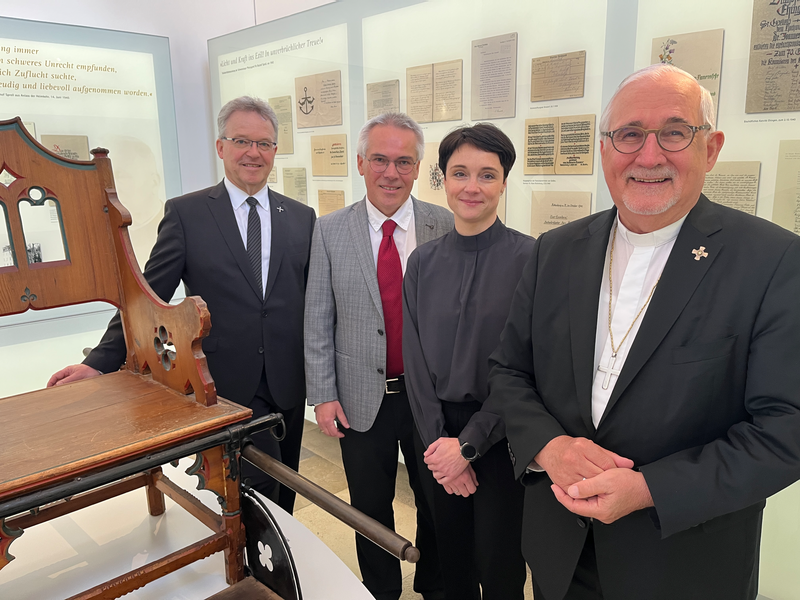
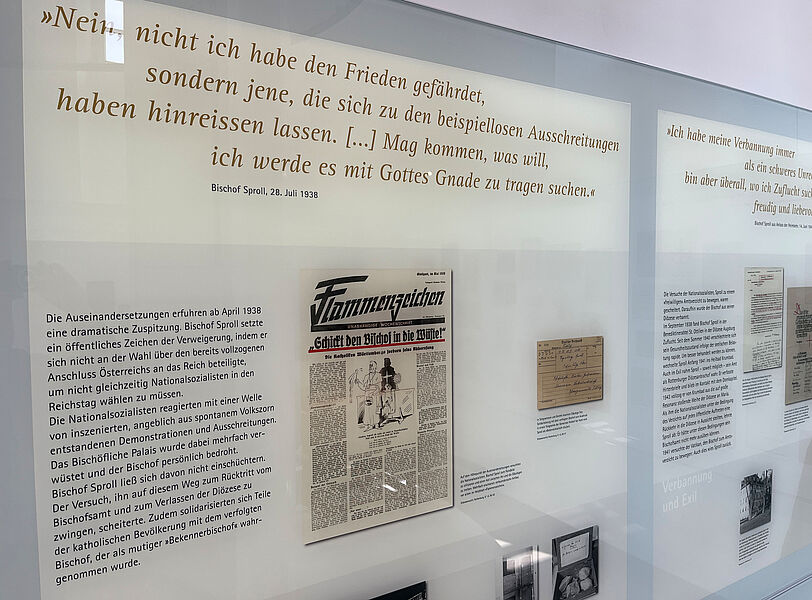
With a ceremony on Tuesday evening, Bishop Dr Gebhard Fürst opened the memorial for Confessor Bishop Joannes Baptista Sproll.
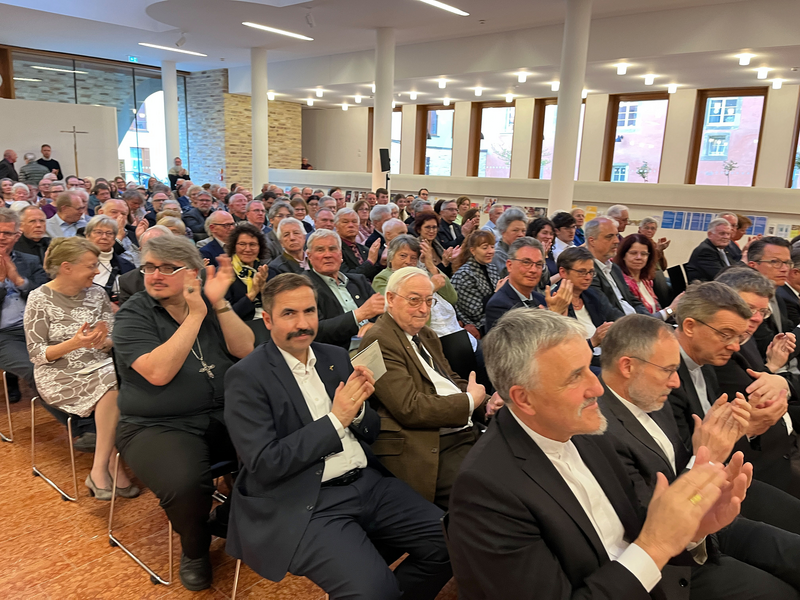
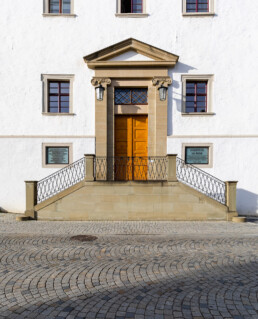
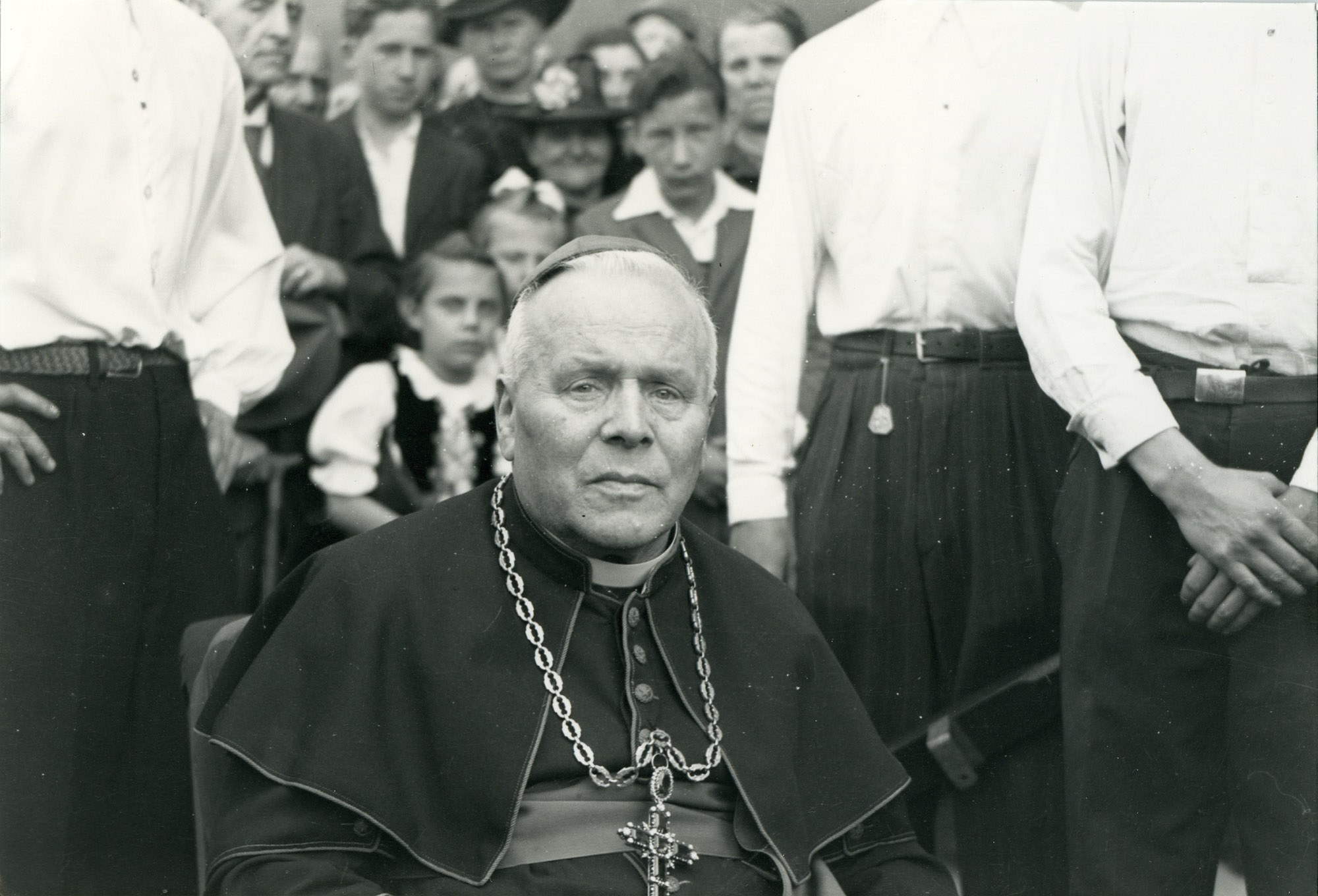
With a ceremony on Tuesday evening, Bischof Dr. Gebhard Fürst opened a memorial for his predecessor in office, Johannes Baptista Sproll, who was the only bishop in Germany to be banned from his diocese by the National Socialists. The interest in the new memorial in the Episcopal Ordinariate was so great that the chairs provided in the foyer were not enough to seat everyone.
Bishop Sproll and his faith-based resistance to the Nazi dictatorship must not be forgotten, Fürst emphasised in his welcoming speech. In the presence of the former Minister President of Baden-Württemberg, Erwin Teufel, he recalled that in 2006, during a joint visit to the memorial for the witnesses of faith of the 20th century in Rome, one of the stones was laid. In 2006, during a joint visit to the memorial for the witnesses of the 20th century in Rome, one of the stones with which the Nazis had broken the windows of Bishop Sproll’s study in the former episcopal palace in 1938 was laid down.
Remembrance needs a place
“Remembrance needs a place, especially in Rottenburg, at the bishop’s seat. That is why the establishment of this memorial right here is very close to my heart and I am very pleased that we now have an outstanding memorial here,” Bishop Fürst stated in his address and recalled that beatification proceedings for Bishop Sproll were opened in 2011, which “hopefully will be decided positively”.
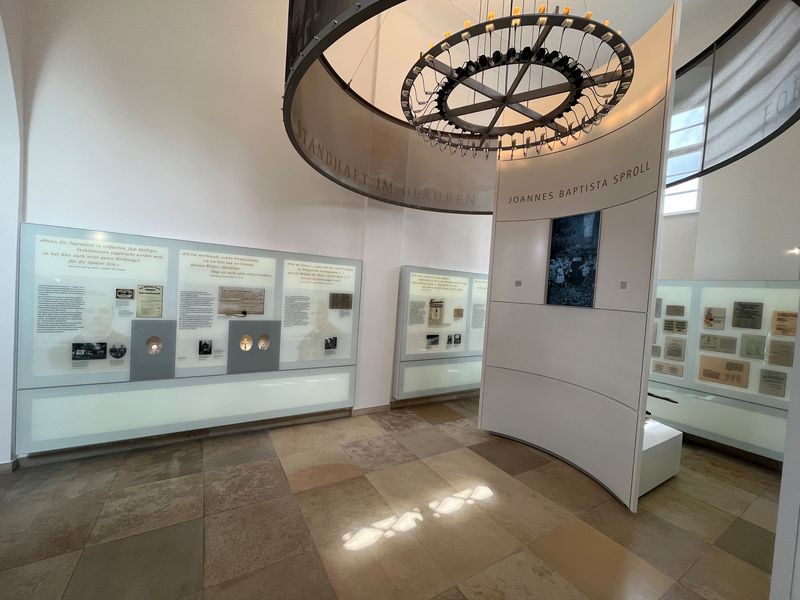
The exhibition designed by Dr Melanie Prange, director of the Diözesanmuseum, and Dr Herbert Aderbauer from the Diözesanarchiv, with the assistance of the Stuttgart office “von Jacobs. Ausstellungsgestaltung – Innenarchitektur”, invites visitors to an introduction to the work of Bishop Sproll through seven chronologically arranged thematic areas with texts, pictures and objects. In addition, the exhibition offers visitors the opportunity to learn more about Bishop Sproll through a multimedia presentation and guided tours.
Orientation and role model
“The memorial is designed for a large public: Groups can and should also come. Especially for school classes, a visit would be relevant for history and religion classes on the topic of Christian faith and resistance,” the Bishop of the Diocese of Rottenburg-Stuttgart emphasised, referring to Sproll’s attitude to topics such as racism and nationalism, which also provides orientation and a role model for the coming generation, as well as Sproll’s commitment to peace. It was of particular importance that Bishop Sproll did everything “entirely out of his Christian faith”, Bishop Fürst emphasised. “He is and remains a role model in faith.”
Besides Cardinal Count von Galen, Sproll was the only bishop who publicly and resolutely stood in the way of the National Socialists – and did so earlier than von Galen, Fürst emphasised, recalling that Sproll had been revered for decades by the population of the Diocese of Rottenburg-Stuttgart as a confessor bishop who resisted National Socialist ideology.
Outside the diocese, however, Bishop Sproll is unfortunately still too little known. “We must therefore continue to make it our task to make his attitude and his deeds generally known: The memorial is intended to contribute to this,” Bishop Fürst said, pointing out that against this background the memorial takes into account the need for remembrance, recollection and also for bringing him into the present.
A special room
Vicar General Dr. Clemens Stroppel summed it up in his invitation to visit the memorial site after the official part of the opening ceremony, which was musically accompanied by a clarinet quintet of the Rottenburg town band: The memorial site is located at the place where Bishop Sproll was taken away by the National Socialists, to which he returned after the end of the Nazi regime and the time of his exile, and at the place where he was laid out after his death before being buried in the bishop’s crypt of the Sülchenkirche.
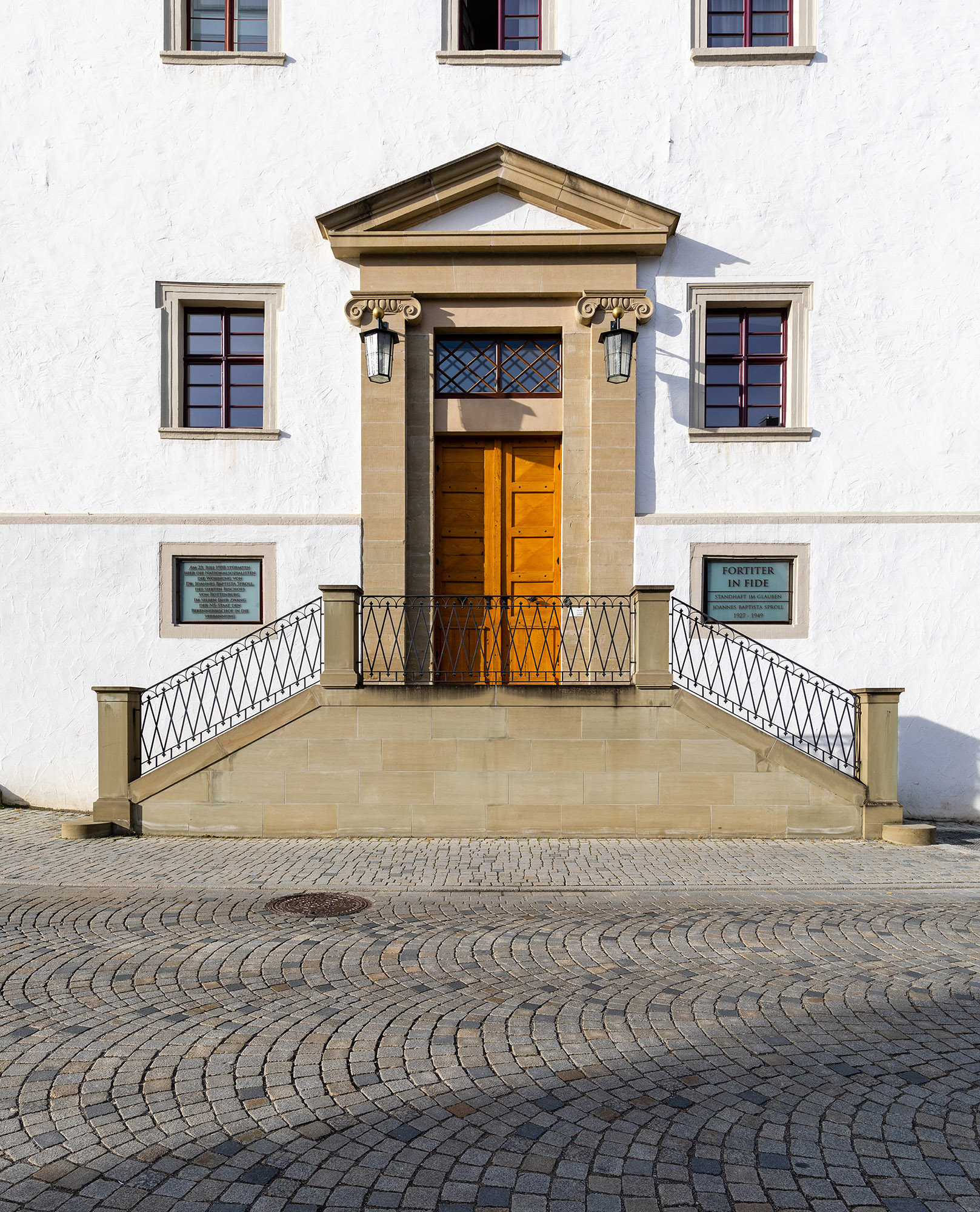
The new memorial has thus been created on a historical site in the entrance area of the former episcopal palace. “It is the entrance hall to the bishop’s former home and thus the inside of the large wooden portal that the Nazis smashed in 1938 when they stormed the house to force Bishop Sproll to leave his diocese,” Dr Herbert Aderbauer recalled.
Dr Dominik Burkard, professor at the Julius Maximilian University of Würzburg and chairman of the History Association of the Diocese of Rottenburg-Stuttgart, went into detail in his lecture entitled “Rottenburg – Rome – Berlin. The ‘Sproll Case’ in the Focus of Diplomacy” at the opening ceremony, he explored the question of what was done on the part of the Vatican to come to Sproll’s aid. “Did they do anything at all or did they leave the bishop of Rottenburg ‘out in the cold’?” asked Burkard.
Note
The memorial is a branch of the Diocesan Museum in Rottenburg, where further information can be obtained by calling +49 7472 / 922180 and -82 or by emailing museum-sprollgedenkort@bo.drs.de.
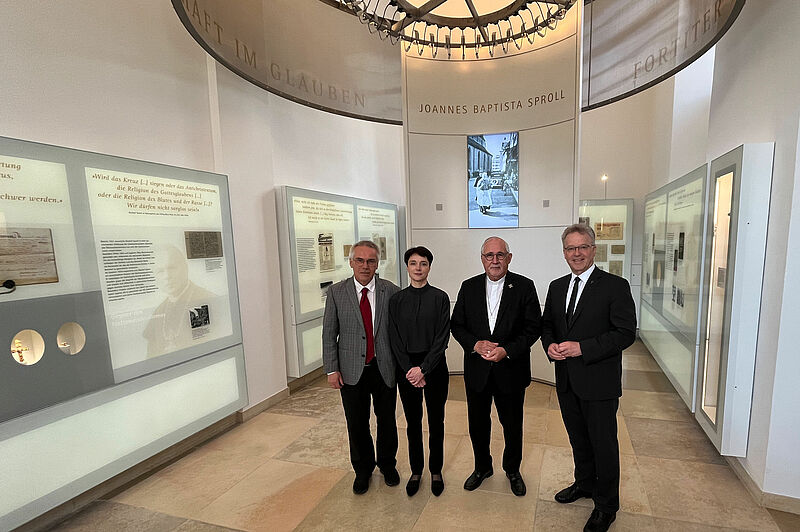

Eröffnung im Mai 2023
Eröffnung und Einweihung des Bischof-Sproll-Gedenkortes
Die feierliche Einweihung des Bischof-Sproll-Gedenkortes durch Bischof Gebhard Fürst wird am Dienstag, dem 2. Mai, um 18.30 Uhr stattfinden.
Beteiligte an der Eröffnungsfeier sind:
- Bischof Dr. Gebhard Fürst
- Generalvikar Dr. Clemens Stroppel
- Prof. Dr. Dominik Burkard (Julius-Maximilans-Universität Würzburg / Lehrstuhl für Kirchengeschichte des Mittelalters und der Neuzeit / Vorsitzender des Geschichtsvereins der Diözese Rottenburg-Stuttgart)
- Marina von Jacobs (Büro von Jacobs)
- Dr. Herbert Aderbauer (Diözesanarchiv)
- Dr.in Melanie Prange (Leitung Diözesanmuseum)
Herzliche Einladung an alle Interessierte!
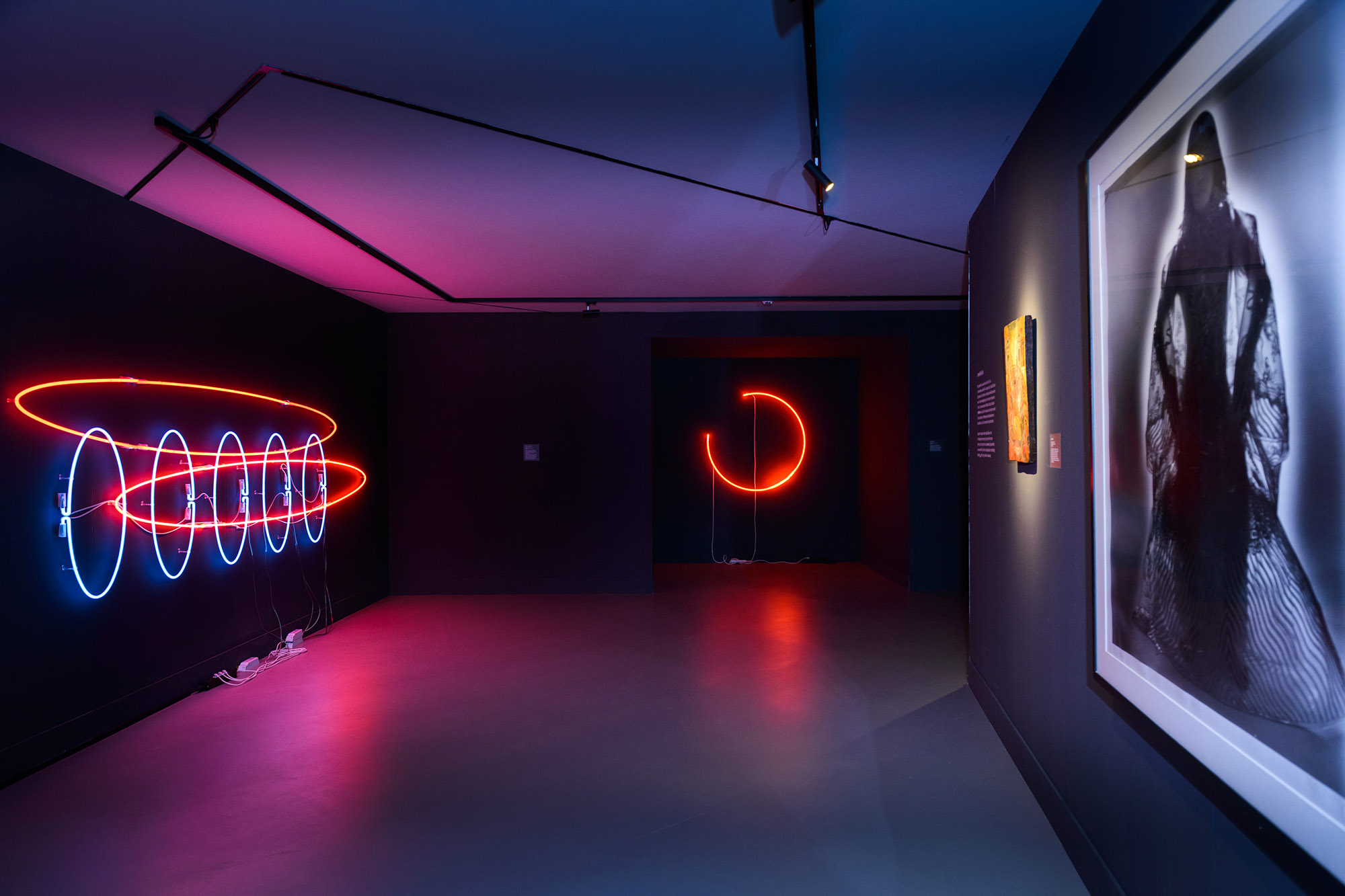
In het LICHT (Into the LIGHT)
Exhibition "In het LICHT", Museum Krona, Uden (Netherlands)
In cooperation with the Diocesan Museum and at the same time as the exhibition “Radiance“, an exhibition entitled “In het LICHT (Into the LIGHT)” is taking place at Museum Krona, Uden (NL).
From 17 to 19 March 2023, there will be the opportunity to travel to Uden with the Diözesanmuseum team and visit the exhibition with a curator tour.
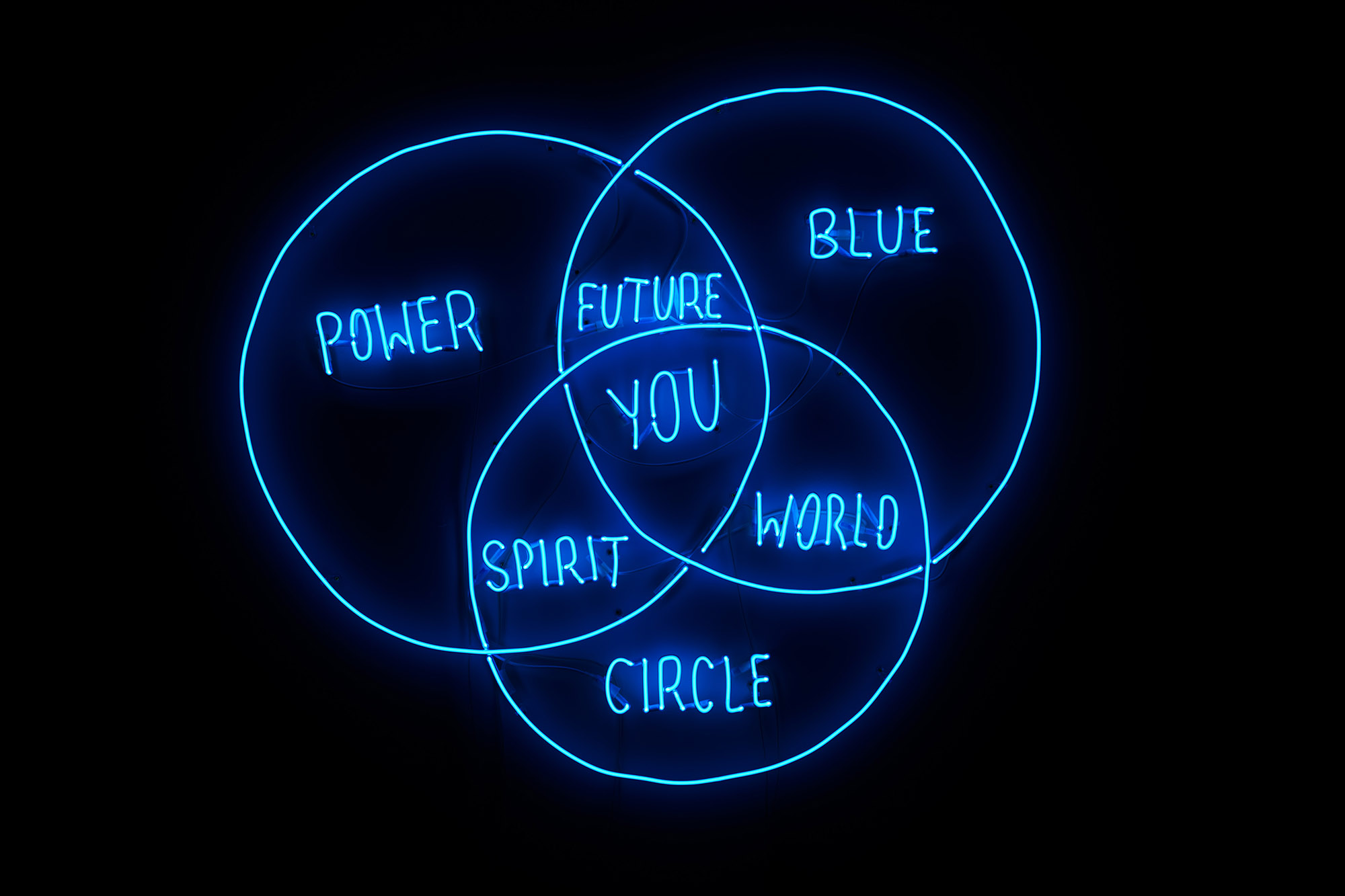
In this presentation, too, light installations, photography and painting by contemporary artists are juxtaposed with medieval masterpieces. Precious objects made of gold, silver and rock crystal from Dutch and German treasure troves and contemporary light artworks make it possible to experience the sensual and spiritual dimensions of light.
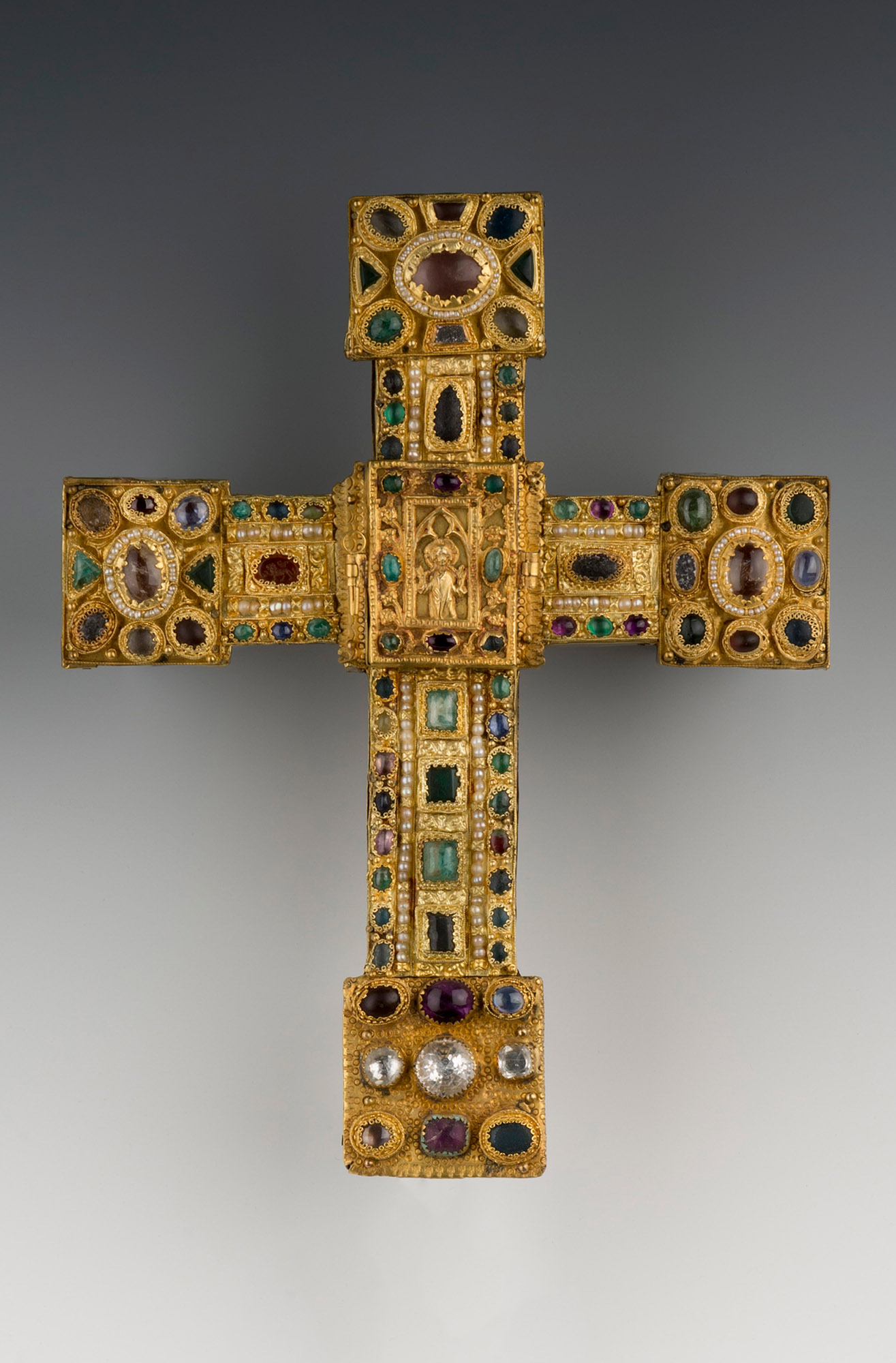
Works of art by world-renowned artists such as James Turrell, Olafur Eliasson, Gabriel Lester and Navid Nuur are combined with examples of medieval light mysticism, with tablets, manuscripts and objects made of precious metals and gemstones whose light reflections want to lead the viewer to the “true light”. One of the highlights is a precious stone-encrusted cross relic from Hildesheim dating from before 1080.
The exhibition features artworks by Jan Andriesse, Marinus Boezem, Suzan Drummen, Jan van Duijnhoven, Olafur Eliasson, Guido Geelen, Kees de Goede, Yayoi Kusama, Ann Veronica Janssens, Gabriel Lester, Willem Marijs, Matthijs Munnik, Matthijs Muller, Navid Nuur, Jan Theun van Rees, Roland Schimmel, Berndnaut Smilde, James Turrell, Veerle Thoben.
More information about the exhibition can be found here:
https://www.museumkrona.nl/nl/nu-te-zien/tentoonstellingen/in-het-licht
Further information & prices for the excursion can be found soon on the homepage of the Diocesan Museum. Stay tuned!

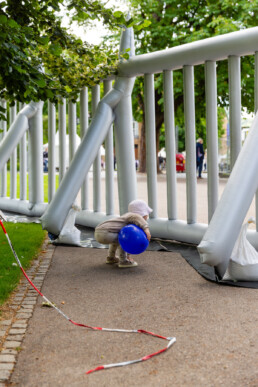
Finissage VULNERABLE - VERLETZLICH with artist conversation
Learn more - in a personal exchange with the winners of the art competition VULNERABLE - VERLETZLICH.
11 artists will present their works in the Diocesan Museum. The focus will be on works from the current special exhibition as well as works that were shown in the tandem exhibition in Stuttgart (St. Maria). There will be room for questions, lively conversations and discussions.
The event is planned – with small breaks – to last until the early evening. The afternoon will be musically accompanied by Anna Ohlmann (saxophone) from Stuttgart.
Interested parties are cordially invited to attend the discussions.
We look forward to ending a successful and multi-faceted exhibition in Rottenburg together.
Please register – up to 4 days before the start of the event – at museum@bo.drs.de or by telephone on 07472-922-180.
Alternatively, you can register online via our event programme.
Information on the competition, (tandem) exhibition and prize winners can be found at:
https://dioezesanmuseum-rottenburg.de/vulnerable-preistraegerinnen/
Picture:
Moritz Urban, FORT COMFORT, Intervention, 2022. Photo: Kai Loges, die arge lola
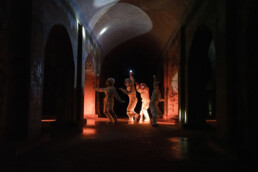
THE EXPLORER:S | Dance performance by Pascal Sangl
A follow-up to the exhibition VULNERABLE
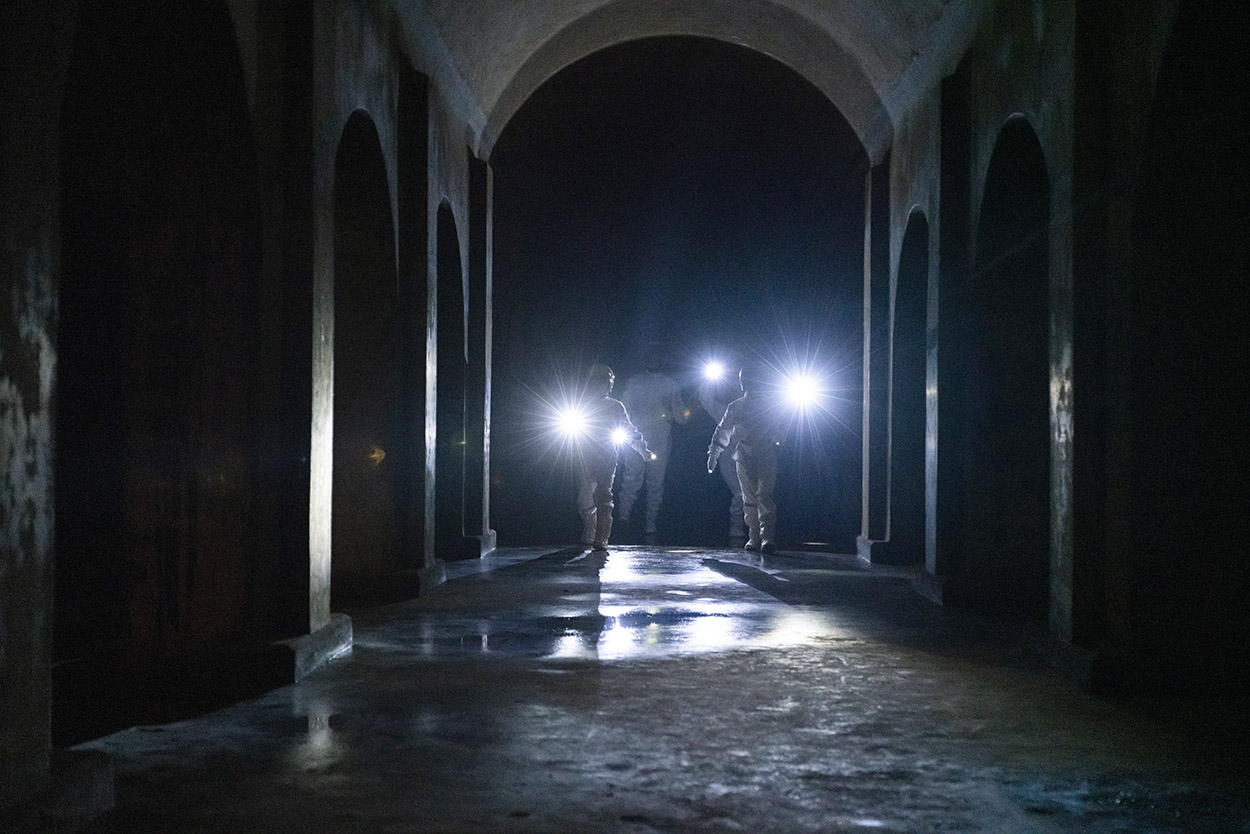
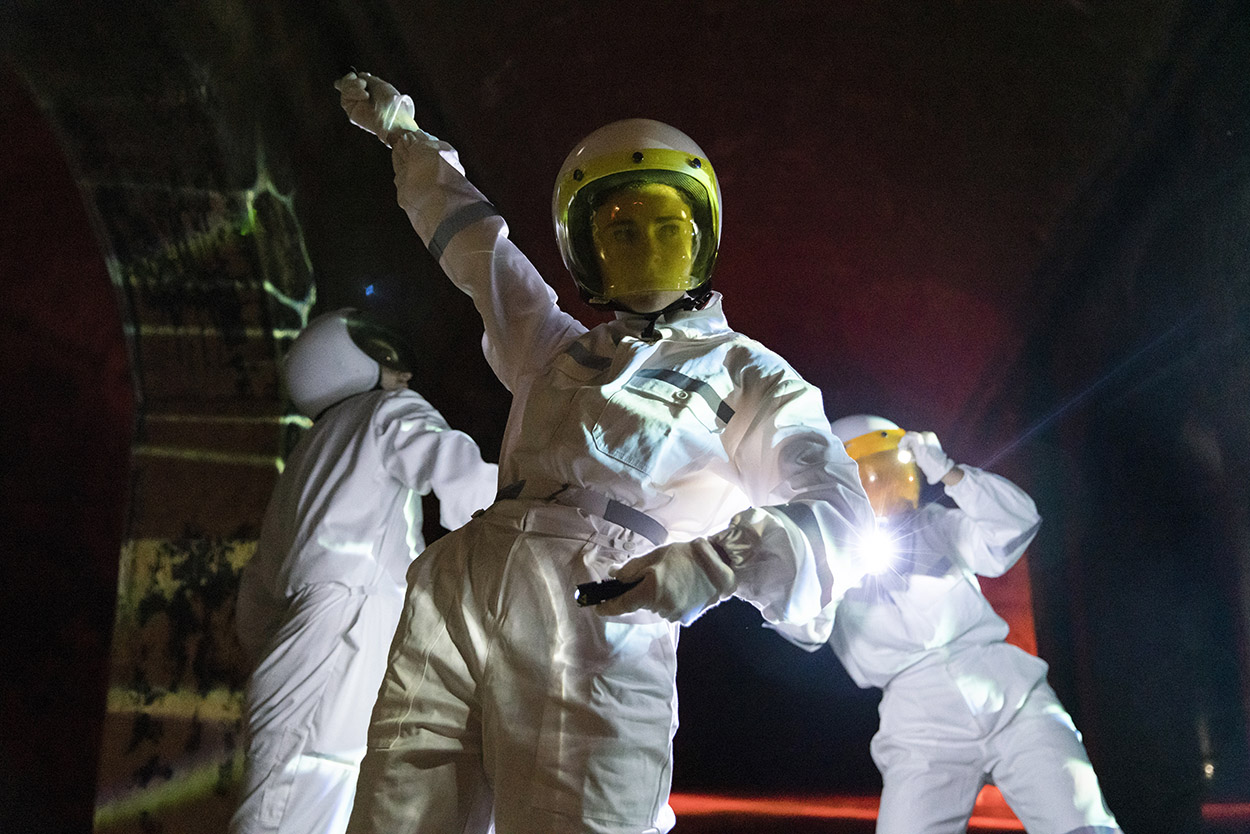
As a follow-up to the exhibition VULNERABLE, three astronaut:s land at the Diözesanmuseum Rottenburg and take the audience on a weightless journey through dance, projection and being.
In a world inspired by deep-sea exploration and space tourism, the EXPLORER:S open the audience’s eyes to their very own perception of the everyday and the supernatural.
Dates: Saturday, 17.09.2022, 8 p.m. (followed by artist:s talk) + Sunday, 18.09.2022, 7 p.m.
THE CREW
Dance Martina Gunkel, Luciana Mugei, Jeff Pham
Costume Marie Freihofer, Laura Yoro
Video projection Lieve Vanderschaeve
Concept & Choreography Pascal Sangl
Text Anna Wulffert
Photos © Eric James McDermott
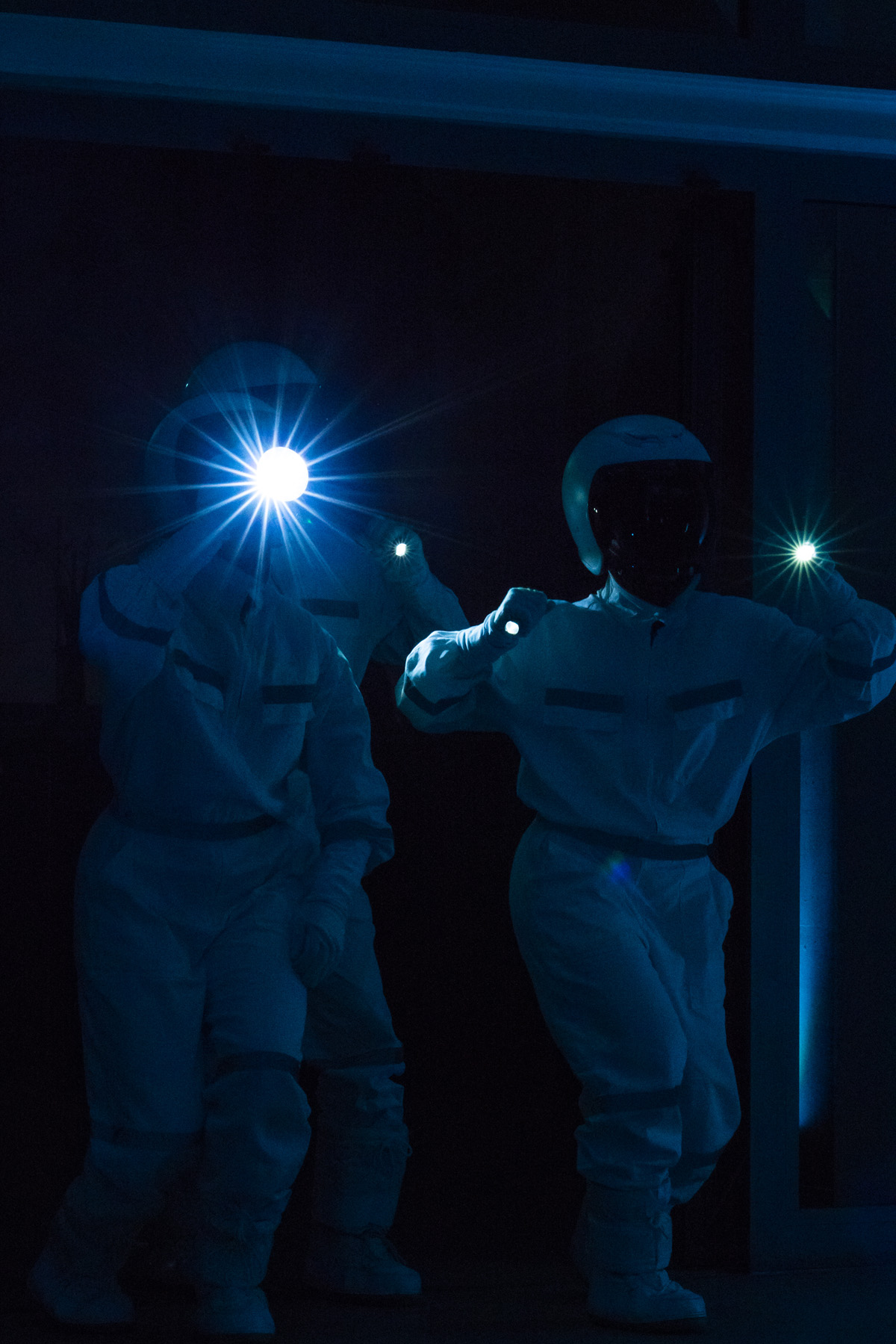
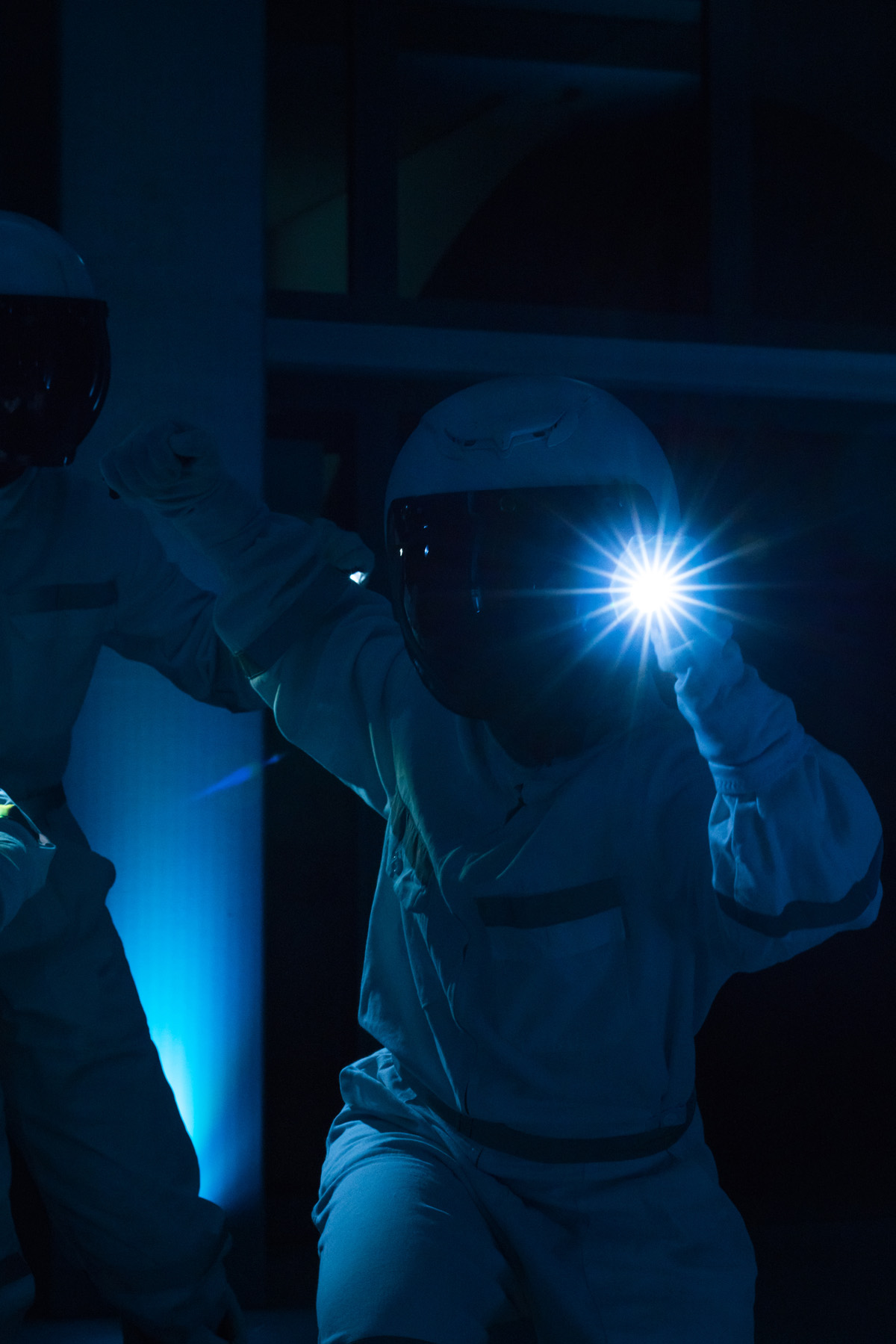
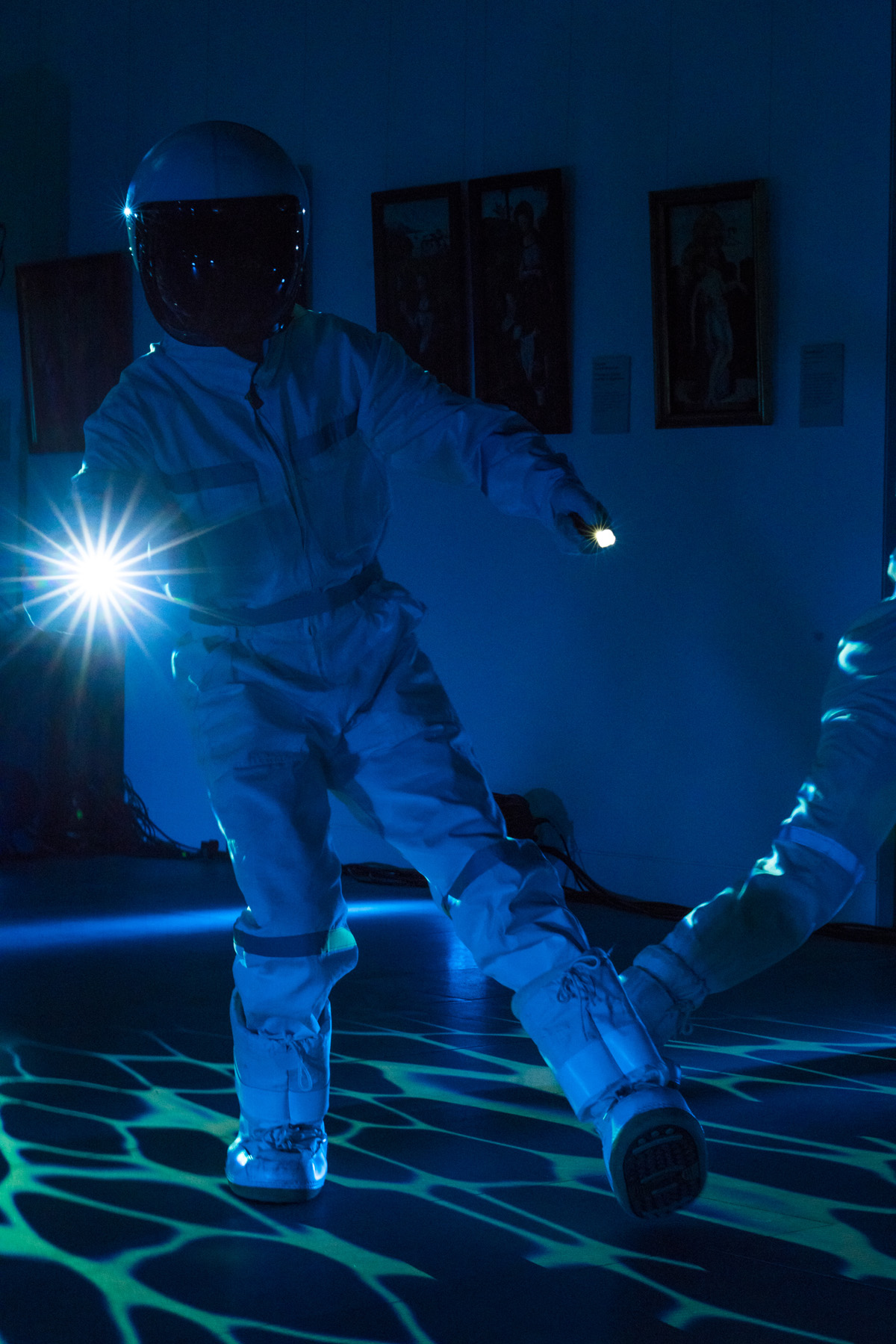
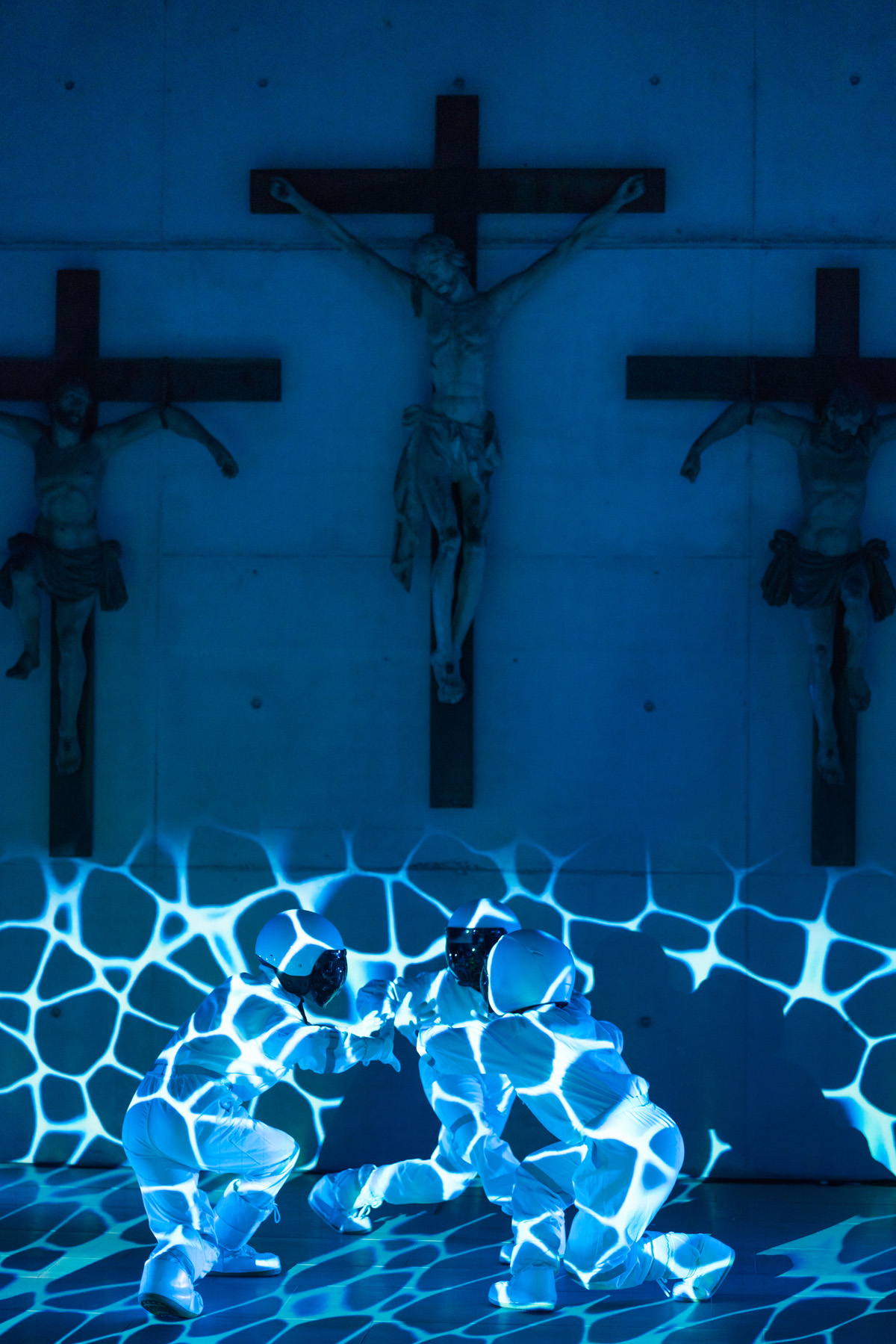
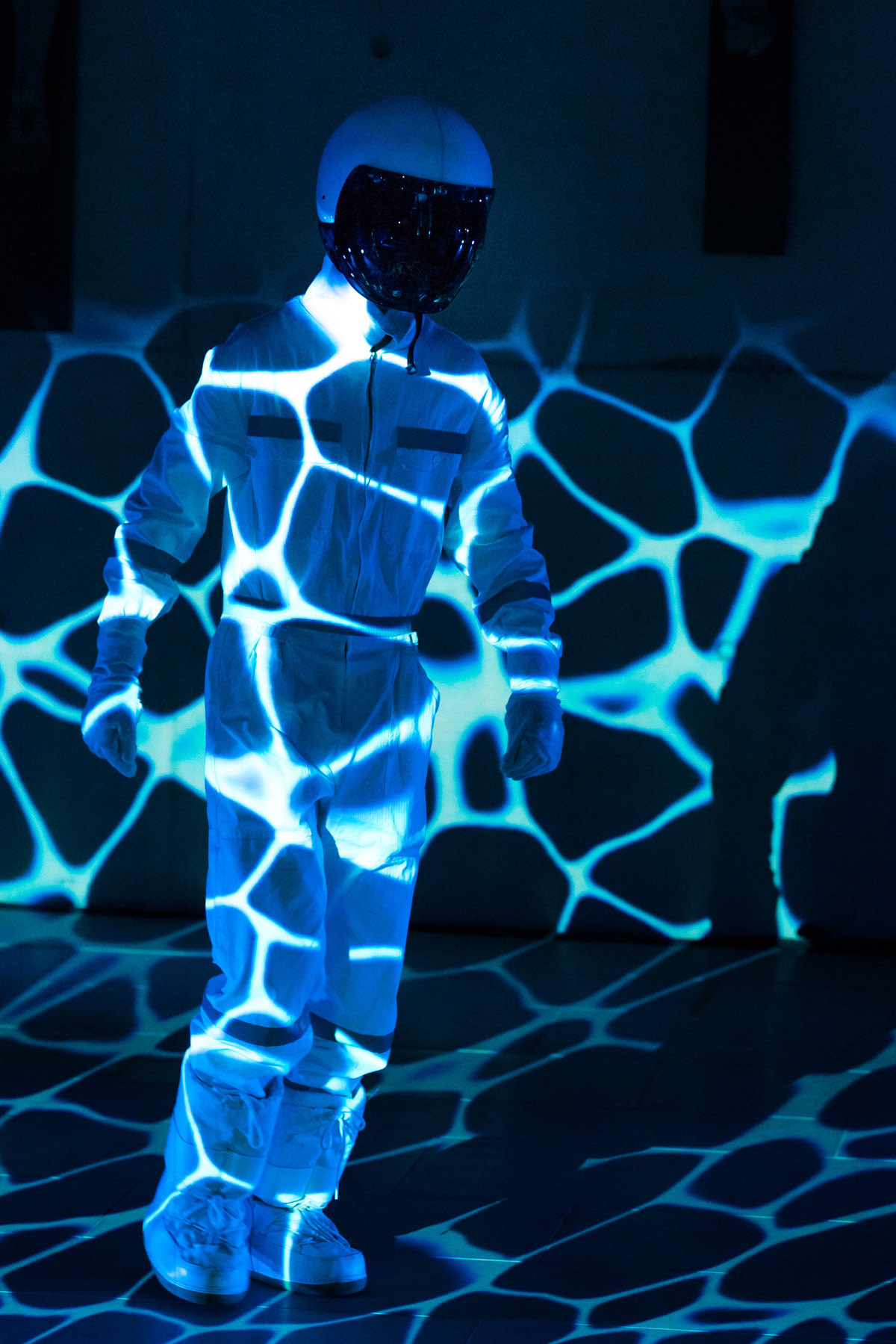
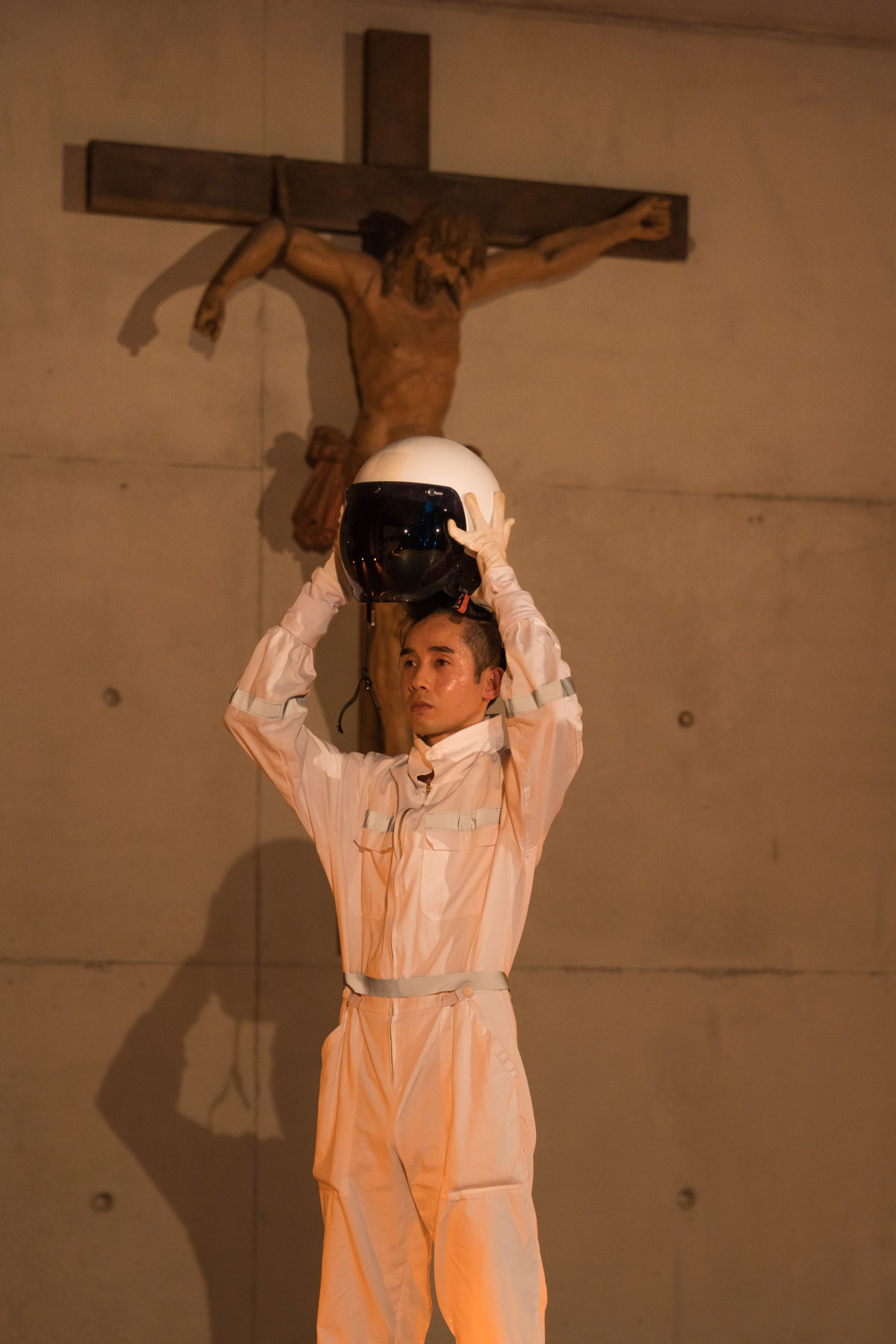
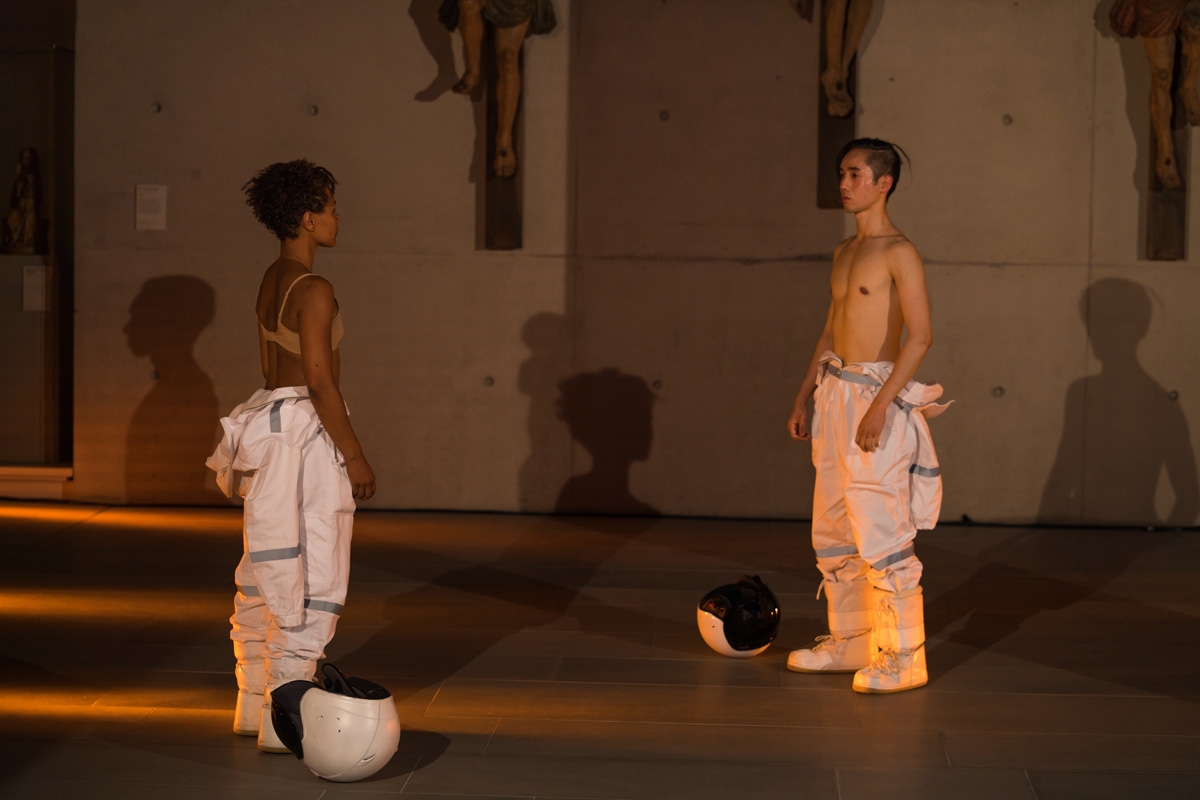
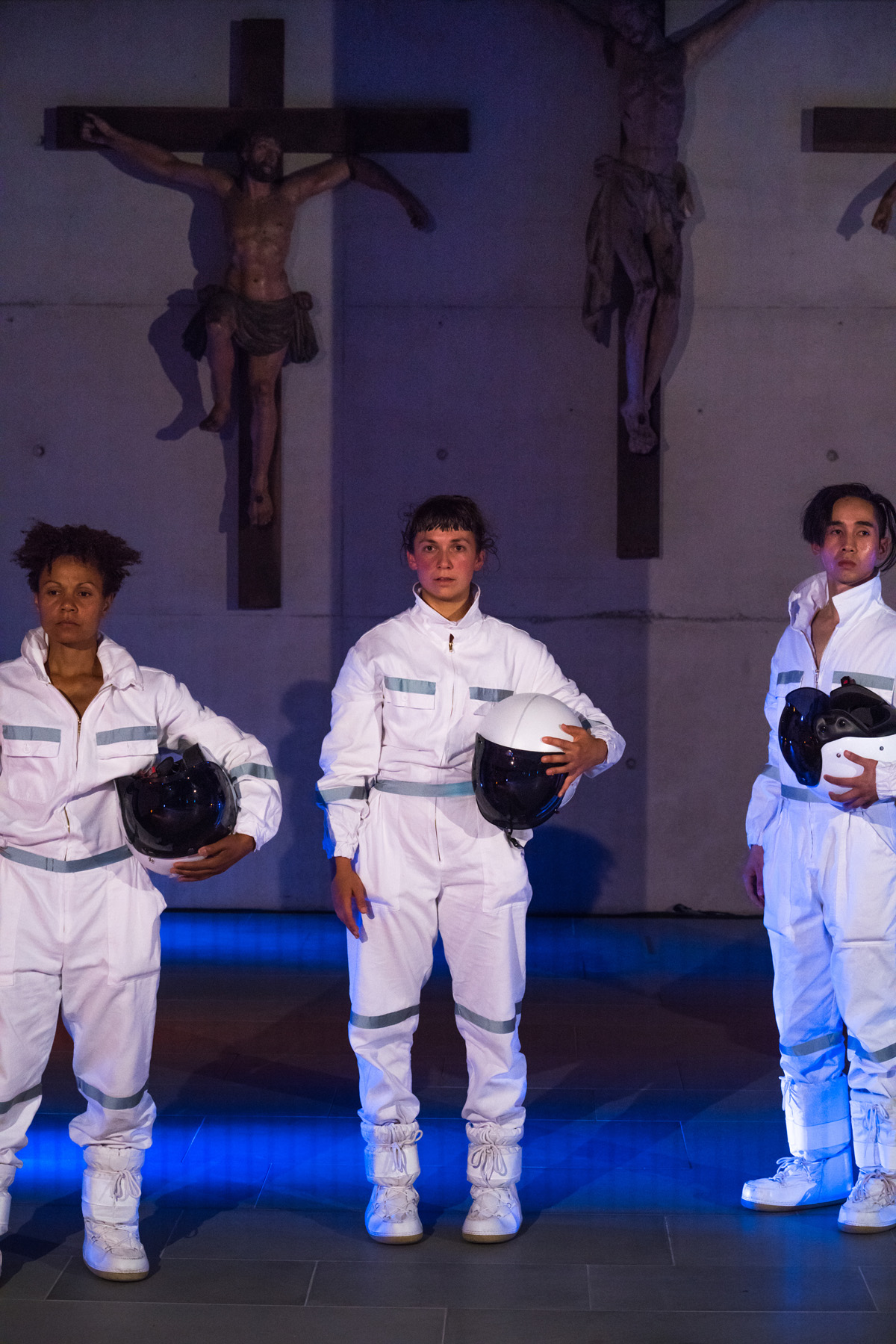
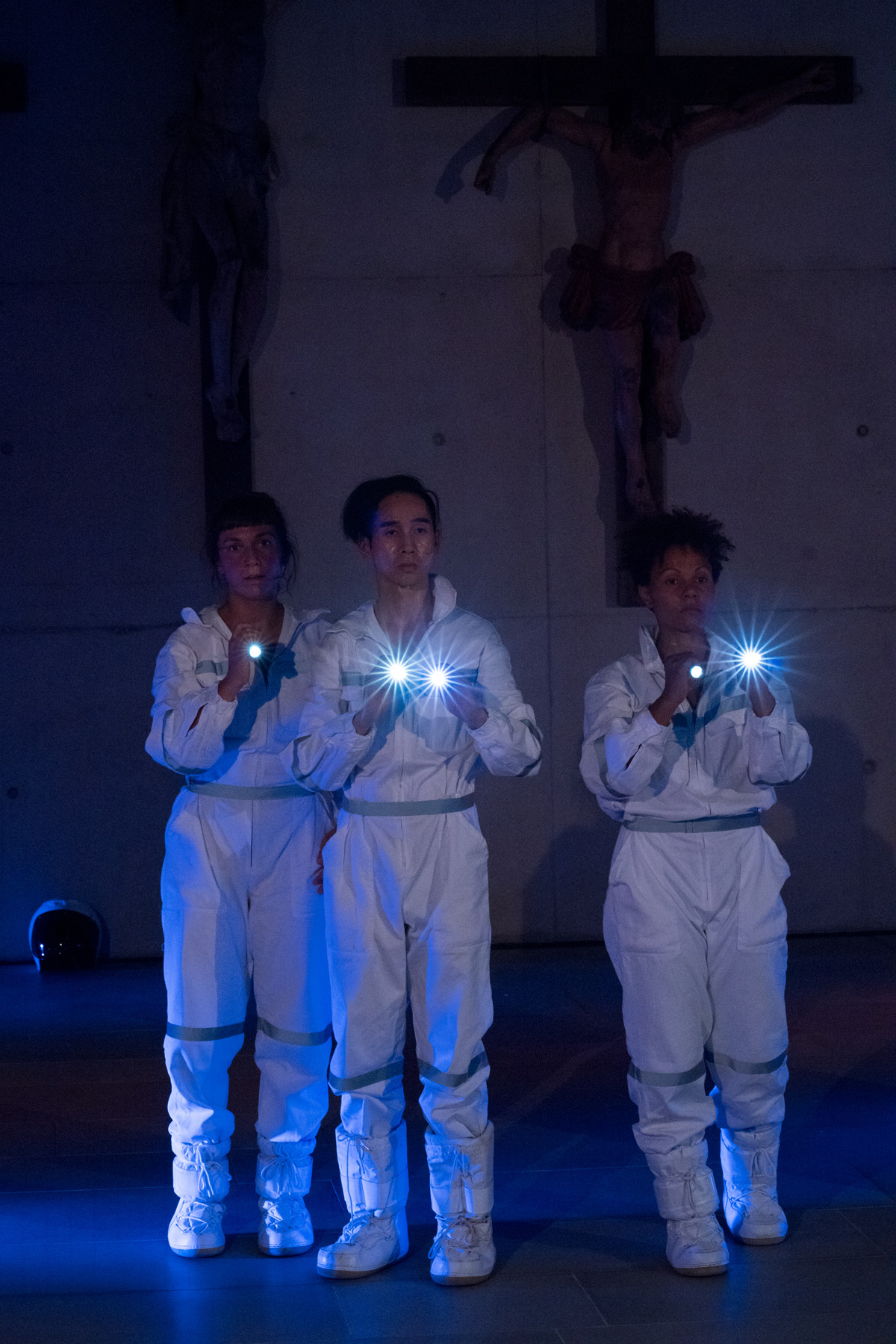
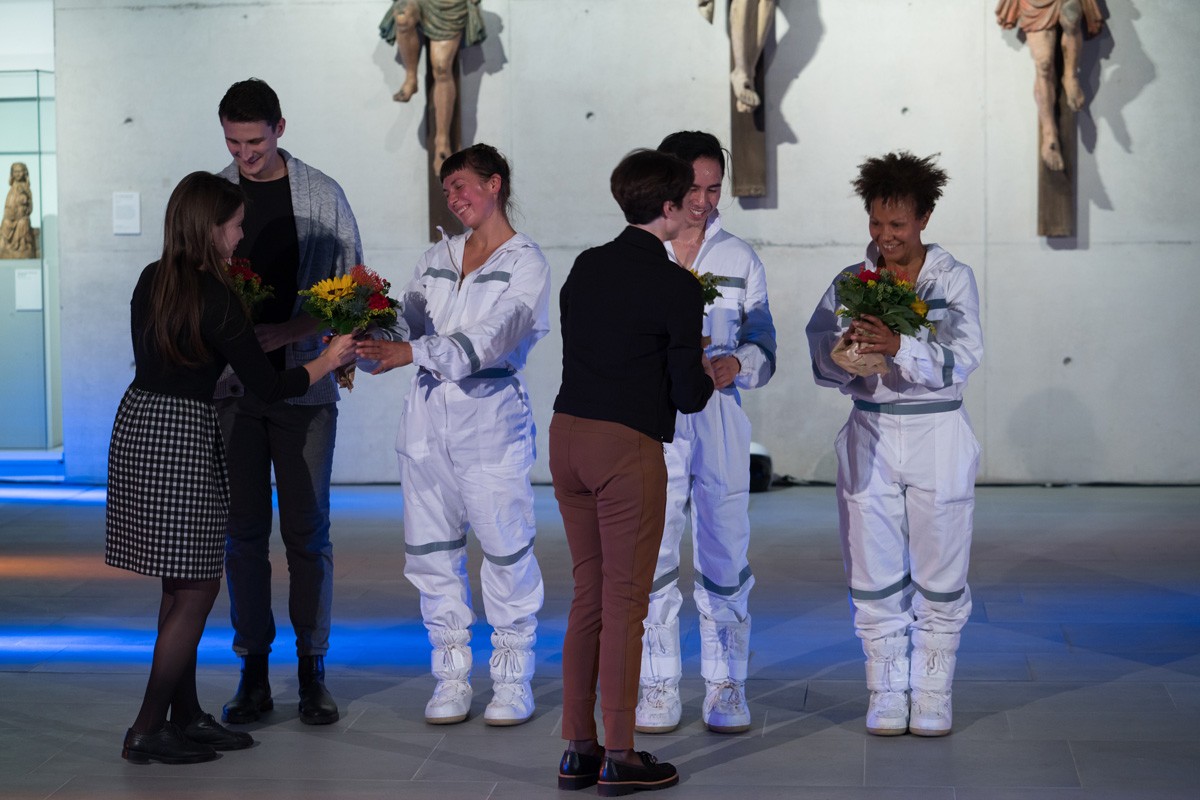
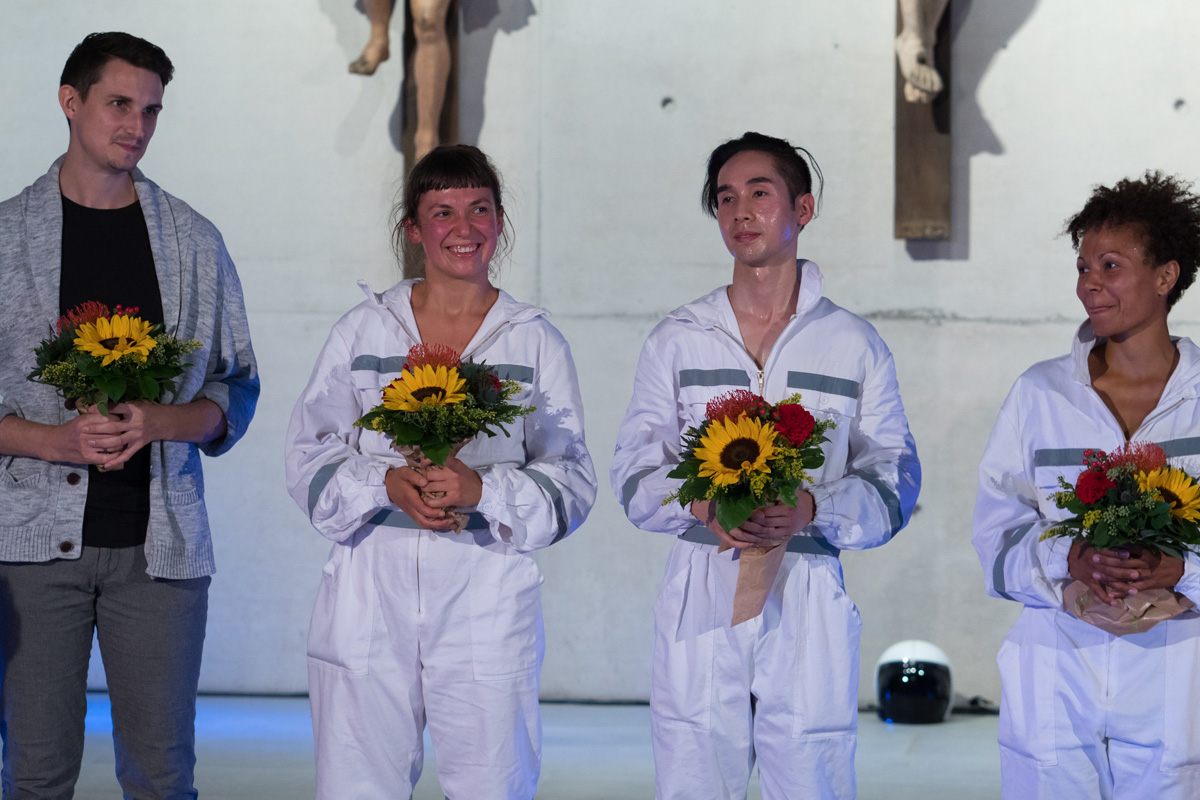
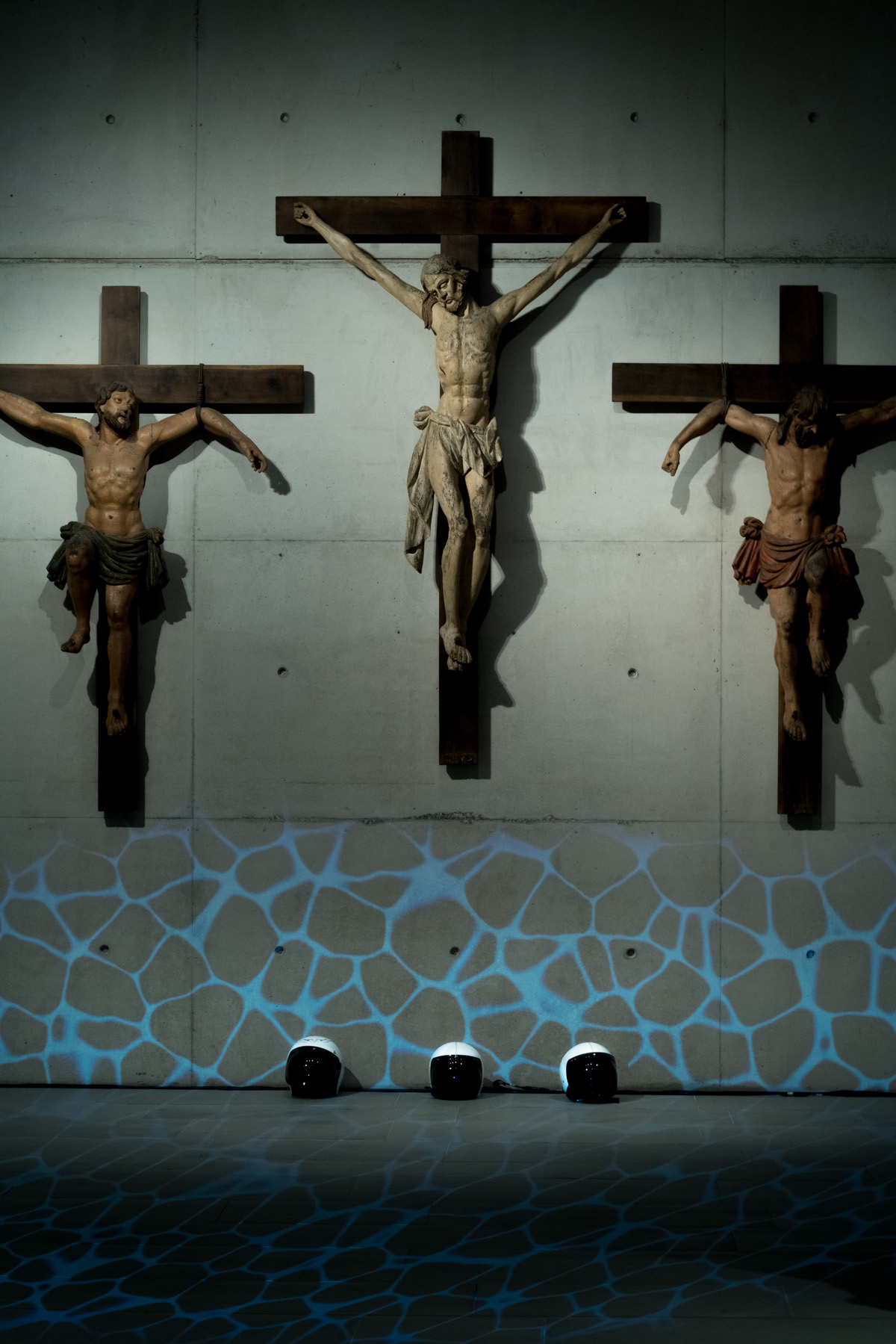
Photos © Dominique Brewing / as part of the “Interventions II” festival of the Stuttgart independent dance and theatre scene


Das Diözesanmuseum gestaltet den Katholikentag mit
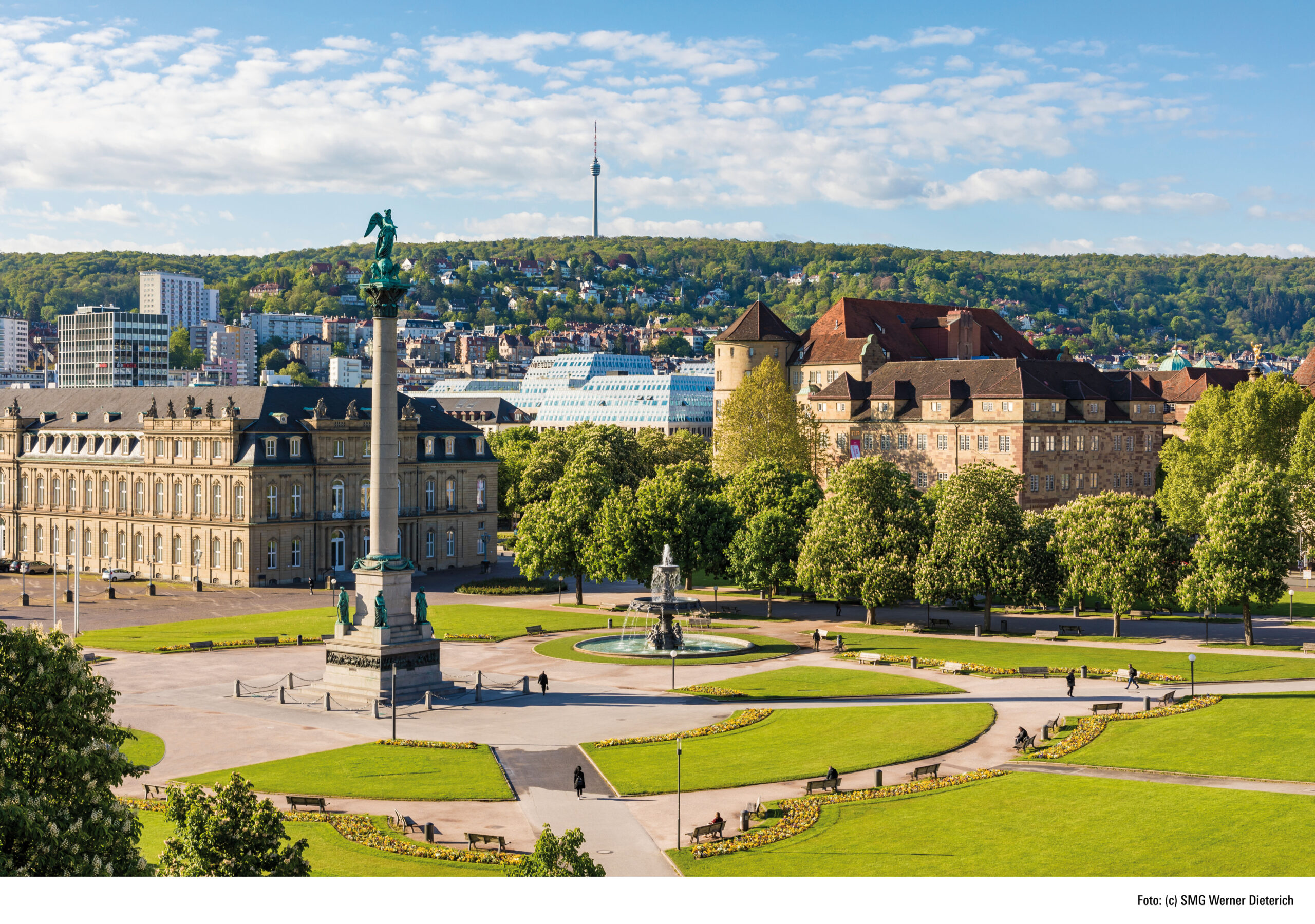
Katholikentag 2022 in Stuttgart
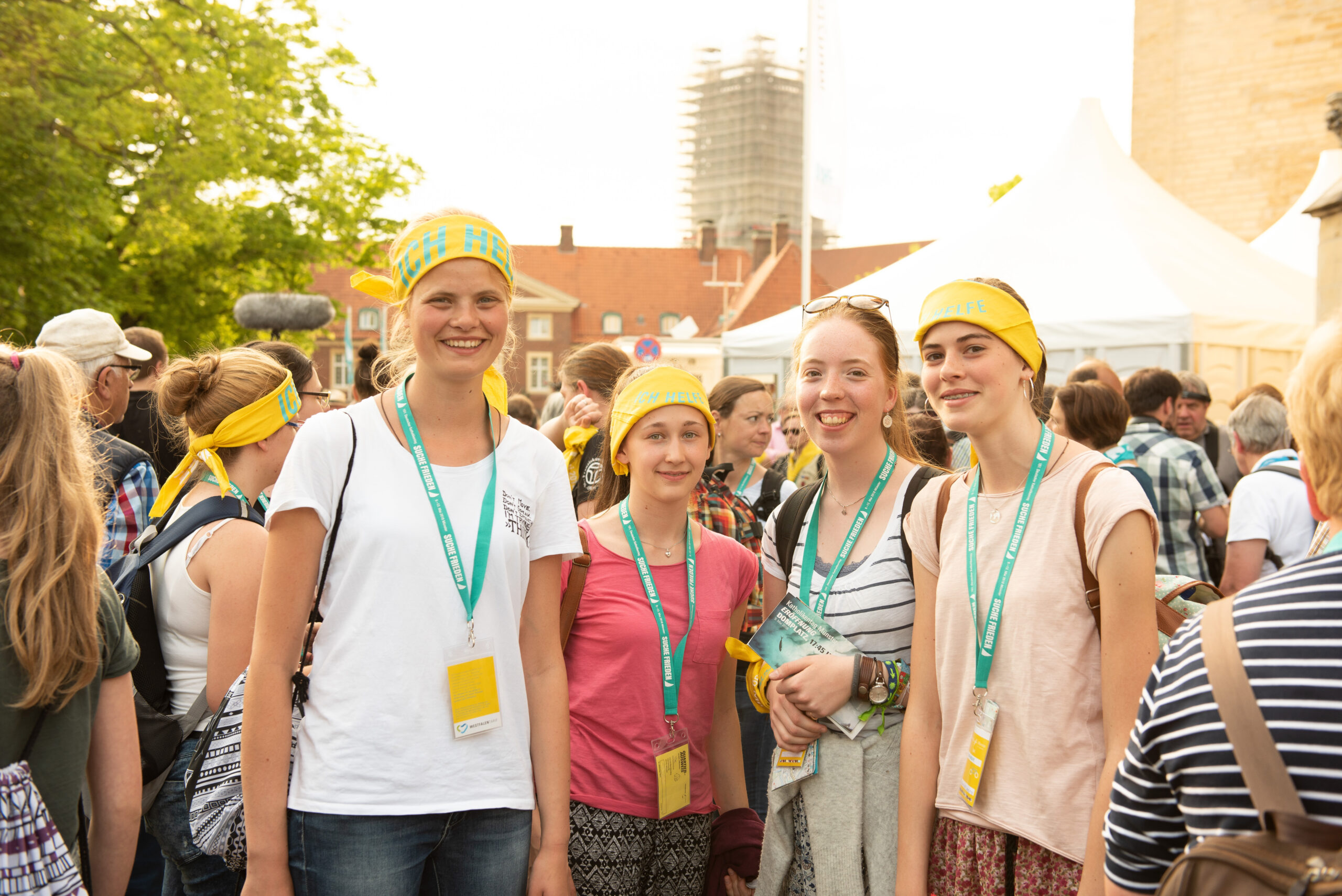
Das Diözesanmuseum gestaltet mehrere Kulturveranstaltungen auf dem Katholikentag mit. Es lohnt sich also um so mehr, Ende Mai nach Stuttgart zu kommen. Der Eintritt zu den Veranstaltungen ist über die Tickets zum Katholikentag möglich.
Veranstaltungen des Diözesanmuseums auf dem Katholikentag

More than timpani and trumpets
Press release
Stuttgart, 27 April 2022
Concerts, cinema, dance, art and literature, exhibitions, cabaret and theatre – more than 200 cultural events invite you to experience and marvel at the Katholikentag in Stuttgart. The organisers presented this wealth today at the Haus der Geschichte in Stuttgart. “With our cultural programme, we want to transport the atmosphere of the Katholikentag into the city for five days,” emphasised Paul Magino, chairman of the Katholikentag’s cultural working group. More than 100 bands, choirs and individual artists have been selected in an application process and will be responsible for a large part of the cultural programme.
And: “We are working together with many cultural institutions in the city of Stuttgart, such as the Linden Museum, the State University of Music and Performing Arts, the House of Music, the State Gallery and the Old Playhouse, and will significantly enrich the Stuttgart cultural scene for this time of the Katholikentag.” Some venues at the Katholikentag are firmly linked to a particular genre: for example, cabaret lovers will flock to the Renitenztheater and the Gustav-Siegle-Haus. Those interested in author readings should note the Wanner Hall in the Linden Museum with readings by Anna-Katharina Hahn, Nora Bossong and Josef Haslinger.
Exhibitions provide their very own insights, such as “Under the Skin – My Tattoo, My Story” in the Akademiegarten (open-air). The most extensive and highly topical project of the Diözesanmuseum is the exhibition “”Vulnerable – Verletzlich” (Vulnerable – Vulnerable) in St. Maria, in which the award-winning works of the art competition of the same name of the Diocese of Rottenburg-Stuttgart – in selection – are presented. The background: The Corona pandemic and, most recently, the warlike actions in Ukraine made us clearly aware of our vulnerability. Vulnerability is an essential moment of human existence that weakens, but can also strengthen. In setting the task, the diocese had consciously decided to formulate the question of vulnerability openly and to allow itself to be challenged by the answers of young creative people – in other words, to make itself vulnerable and open. Especially against the background that the church is responsible for the worst psychological and physical wounds to children, young people and queer people, as recent studies and revelations have made shockingly clear. Around 600 artists responded to the call for entries. Contemporary art forms such as installations, video and sound works, projections and performances as well as objects of the classical visual arts such as paintings, drawings and sculptures were submitted.
The most extensive segment of the cultural programme at the Katholikentag is music – and this will be heard in very different places in the city. Gospel concerts, pop and rock, new spiritual songs, organ music and contemporary orchestral works will offer listening pleasure. A special work that also invites participation is the #coronation mass. At the centre of the premiere is Mozart’s Coronation Mass KV 317 as a symbol of joie de vivre and confidence. In addition, the specially developed sound installation allows each individual visitor to become part of the whole in advance – with the help of his or her individual voicemessage sung on the short musical phrase “Dona nobis pacem” using a smartphone. Simply sing it, call +49 711 20 70 31 70 and sing it on your voicemail or record it as a voice memo and send it by message to coronation@katholikentag.de. The deadline for sending in voice messages is 10 May.
The extensive film programme of the Katholikentag with its discussions is not only aimed at interested cineastes, but also at pupils and students and addresses current socially relevant questions. For example, in the film with discussion “The Unknown Girl”, which deals with moral integrity and social justice.
Contact:
Stephan von Kolson, phone: +49 175 4343485, email: presse@katholikentag.de
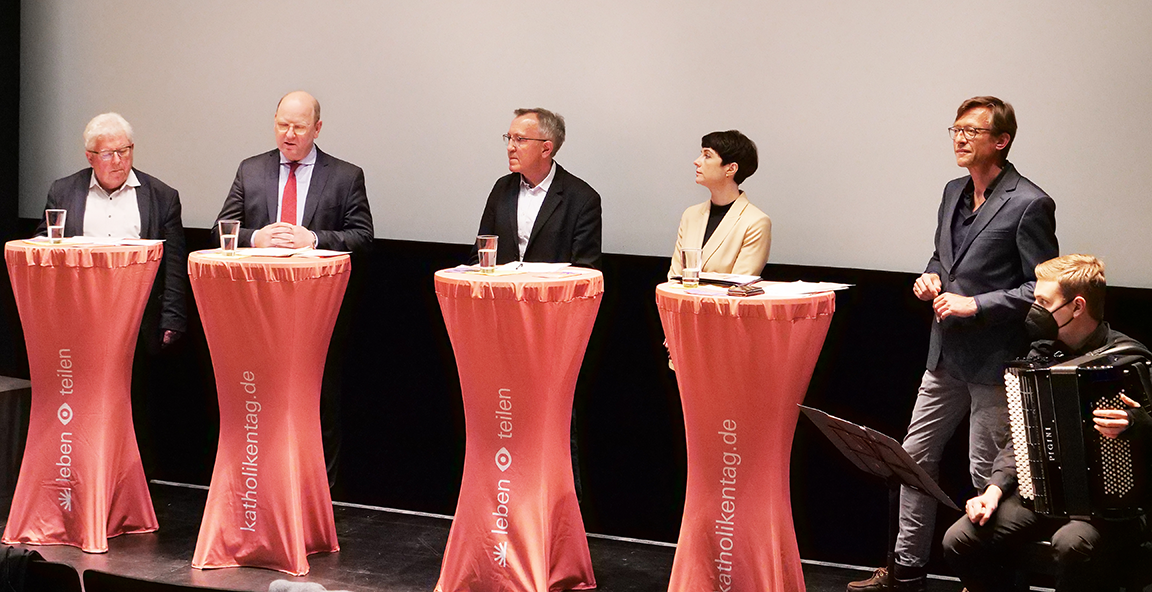
f.l.t.r.: Paul Magino, Prof. Jörg-Hannes Hahn, Eberhard Schwarz, Dr. Melanie Prange
Accordion: Nepomuk Golding
We make art strong in times of crisis
At the Katholikentag in Stuttgart, award-winning works from the art competition "Vulnerable" will be on display for the first time in St. Maria's from 27 May.
The competition had met with a great response: Around 600 artists applied, 25 young creatives were selected. They dealt with the vulnerability of human life in a variety of ways.
“The pandemic and most recently the war in Ukraine have brutally torn us out of what we take for granted in life,” says Auxiliary Bishop Dr Gerhard Schneider, who is also responsible for art in the Diocese of Rottenburg-Stuttgart. “It is difficult to put this much-cited ‘turn of time’ into words. For us as a church, it is important to make art strong, especially in times of crisis like these. Art offers ways to express, find and orient oneself in the unknown and always incomprehensible events of our time – especially where words are no longer able to do so.”
Achieving two kilometres of distance with one step
The works are correspondingly diverse in their form of presentation. For example, Simon Pfeffel’s video performance “Mit einem Schritt” (With one step), which won him one of the first prizes, shows how he covered the approximately two-kilometre distance from Stuttgart’s main railway station to St. Mary’s with just one step. “To do this, the artist tied one of his legs up and then hopped and limped his way through Königsstraße,” reports Sebastian Schmid, theologian and curator of St. Maria’s, who was part of the interdisciplinary competition jury along with nine other people.
Schmid: “Simon Pfeffel was clear that he would not make it without the help of strangers. Nevertheless, he didn’t ask anyone for help. Only when passers-by in Stuttgart offered to support him did he let themselves be carried or propped up. The exhibition shows video recordings of this impressive action, in which he put himself at the mercy of strangers.”
The motto of the Katholikentag also stands for being vulnerable together
The director of the Diocesan Museum in Rottenburg, Dr Melanie Prange, who was responsible for the competition and also a member of the jury, is pleased that the exhibition will now be opened during the Katholikentag. “Our works of art fit particularly well with the motto ‘sharing life’ of the Katholikentag, because all people are vulnerable, because vulnerability is precisely the essential moment of human existence and God has exposed himself to this vulnerability. Together we are vulnerable and it is especially in togetherness that paths to healing are paved. The motto of the Katholikentag brings essential thoughts of our competition and exhibition theme once again to the point.”
Kriz Olbricht wants to show with his artwork that the church itself is also vulnerable. To do this, he has hammered five dividing wedges into the wall of St. Maria. These are a kind of nails that normally create cracks in stones.
“It took a lot of convincing before the artist was allowed to hammer these dividing wedges into the wall of the church,” Schmid reports. “Just the idea that there could be a crack in the church wall almost caused panic in some people. The congregation itself was the least afraid.” The parish council immediately understood what Olbricht was about, he says. “After all, the five nails in the chancel stand for questions like: How seriously does the church take the cross? Does it dare to make itself vulnerable? Does it risk its own structure to take the side of the wounded?”, the theologian explains further.
Exhibition on view in Stuttgart from 27 May to 24 July
Visitors to the exhibition can look forward to nine more works of art, which will be on display in St. Mary’s from 27 May to 24 July. Dr. Prange is pleased that the exhibited works inspire new perspectives: “”The diocese has consciously decided to formulate a question and to let itself be challenged by the answers of young creative people – in other words, to make itself vulnerable and open. Especially against the background that the church itself is responsible for the worst psychological and physical wounds. Taking creatives seriously and not giving them guidelines enables a serious engagement with religious content, biblical texts and existential questions. The artistic results are surprising, inspiring, open to interpretation and testify to the depth of the engagement. A result to be emphasised for the cooperation and interaction of church and art.”
Award ceremony at the vernissage on 27 May.
The award ceremony of the Vulnerable competition will take place at the vernissage of the exhibition on Friday, 27 May, at 7.30 pm with Bishop Dr Gebhard Fürst and the members of the jury in St Mary’s. Some of the artworks will also be exhibited there until Sunday, 24 July.
In addition, there will be a tandem exhibition at the Diözesanmuseum Rottenburg between 19 June and 28 August with the other part of the award-winning works. The vernissage of this exhibition with Auxiliary Bishop Dr Gerhard Schneider will begin on Sunday, 19 June, at 3 pm.
You can find further information online: https://dioezesanmuseum-rottenburg.de/vulnerable-preistraegerinnen/
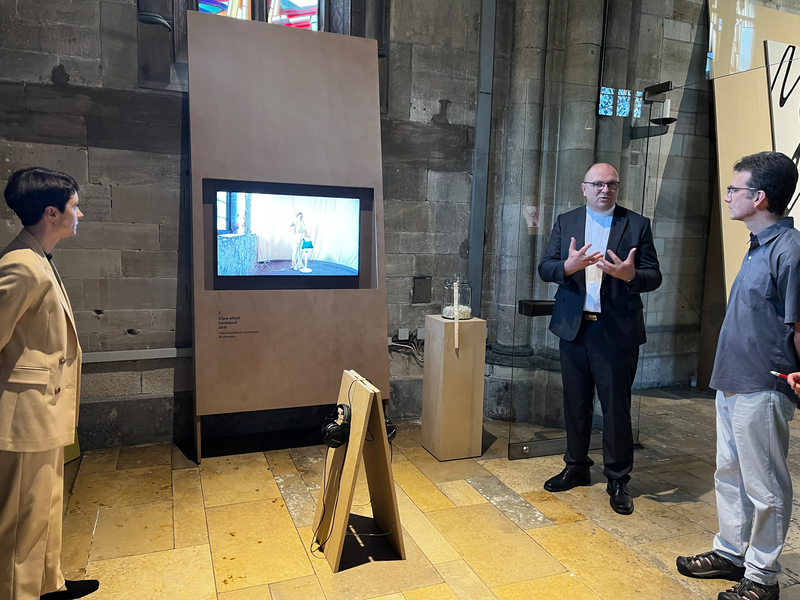
From left: Dr Melanie Prange (Director Diözesanmuseum Rottenburg), Auxiliary Bishop Gerhard Schneider, Sebastian Schmid (Curator “St. Maira als”).
Photo: Diocese of Rottenburg-Stuttgart / Eva Wiedemann
Shaping faith, fashioning splendour
How theological content is conveyed through fabrics and clothing is the subject of this issue of "Alpha and Omega".
Clothes make the man – and sometimes also tell us something about people’s faith. This is the subject of a large fashion exhibition in the Diocesan Museum in Rottenburg am Neckar – and in the next issue of “Alpha & Omega – Church in conversation”.
Magnificent vestments of saints can be admired in many pictures. Museum director Melanie Prange reports on how theological content is conveyed through these fabrics and how textiles make the sacred tangible, so to speak.
In cooperation with the Pforzheim University of Applied Sciences, fashion students also designed their own collections and liturgical vestments of the future for the exhibition. It becomes clear that religion and fashion have a lot in common, as Pforzheim professor Sybille Klose explains in the programme.
Watch the programme
The programme “Shaping Faith – Fashioning Splendour” produced by KiP-TV was first broadcast on 30 April 2022. You can find this and other episodes of “Alpha and Omega” on the YouTube Diocesan Museum Channel.
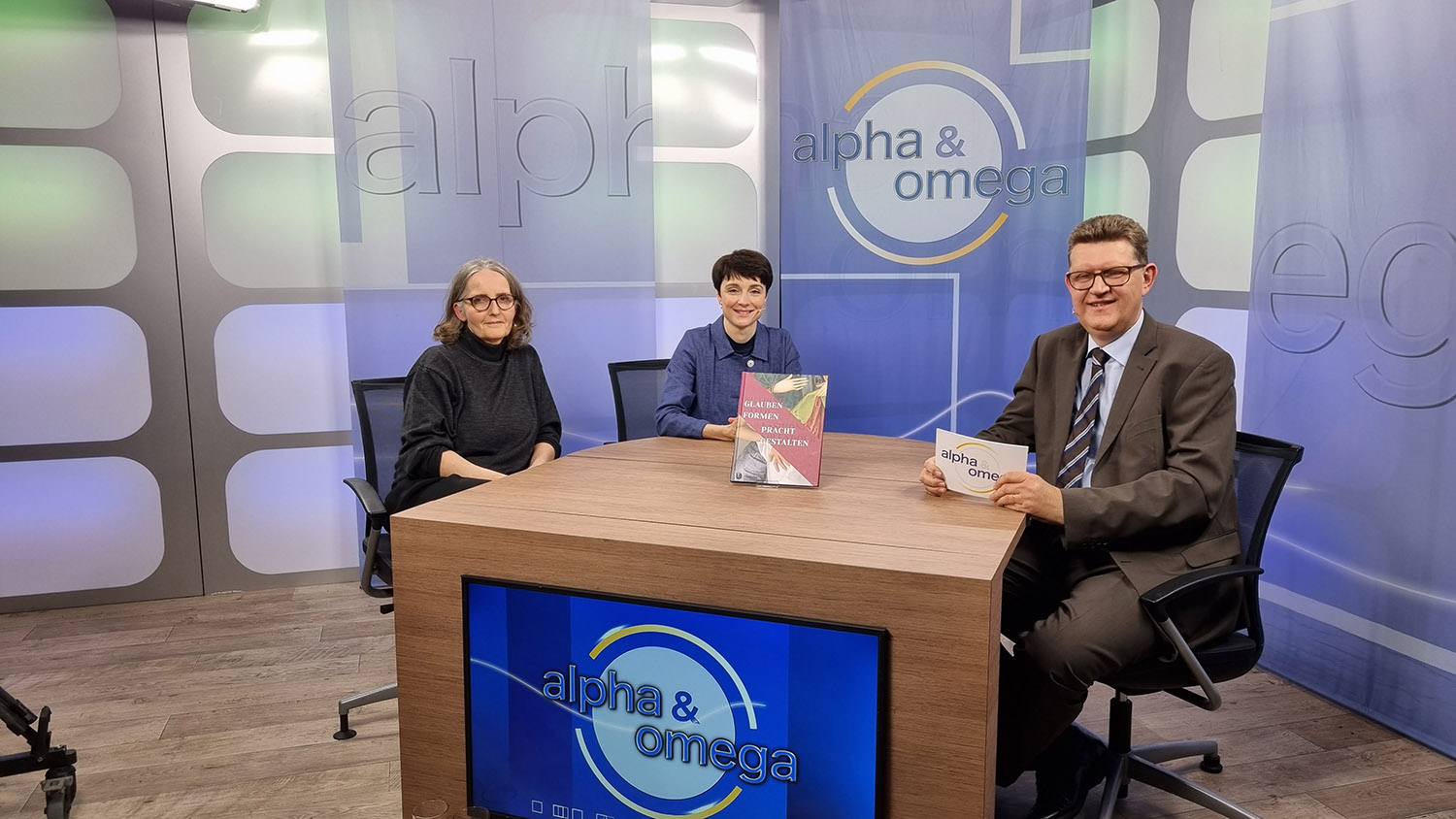
Talking about sacred art and textile messages: Prof. Sybille Klose from the Pforzheim Faculty of Design, Dr Melanie Prange, director of the Rottenburg Diocesan Museum, and presenter Christian Turrey.
Picture: KiP-TV